
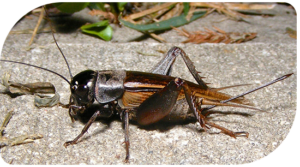
 On warm evenings in Northeast Florida, the air often seems to hum. Step outside just after sunset, and the sound is suddenly everywhere—steady, rhythmic, alive. It drifts from the grass near the porch and pulses through the darkness as if the night itself has found a voice. Most of us call it “the crickets,” without a second thought.
But listen closely, and a question begins to take shape. Is that sound really from a cricket — or could it be something else entirely, like a grasshopper? Or are cricket and grasshopper simply the same insect by different names?
Cousins, Not Twins
No, crickets and grasshoppers are not the same insect, though they are close relatives. Both belong to the order Orthoptera, a large group of jumping insects that also includes katydids and locusts. They share long hind legs adapted for leaping and strong chewing mouthparts for feeding on plant material.
Crickets are usually creatures of the evening. They hide in grass, under leaves, or near foundations during the day, emerging as temperatures cool. Grasshoppers, by contrast, prefer sunlight. They are most active in fields, lawns, and roadside grasses during the heat of the day.
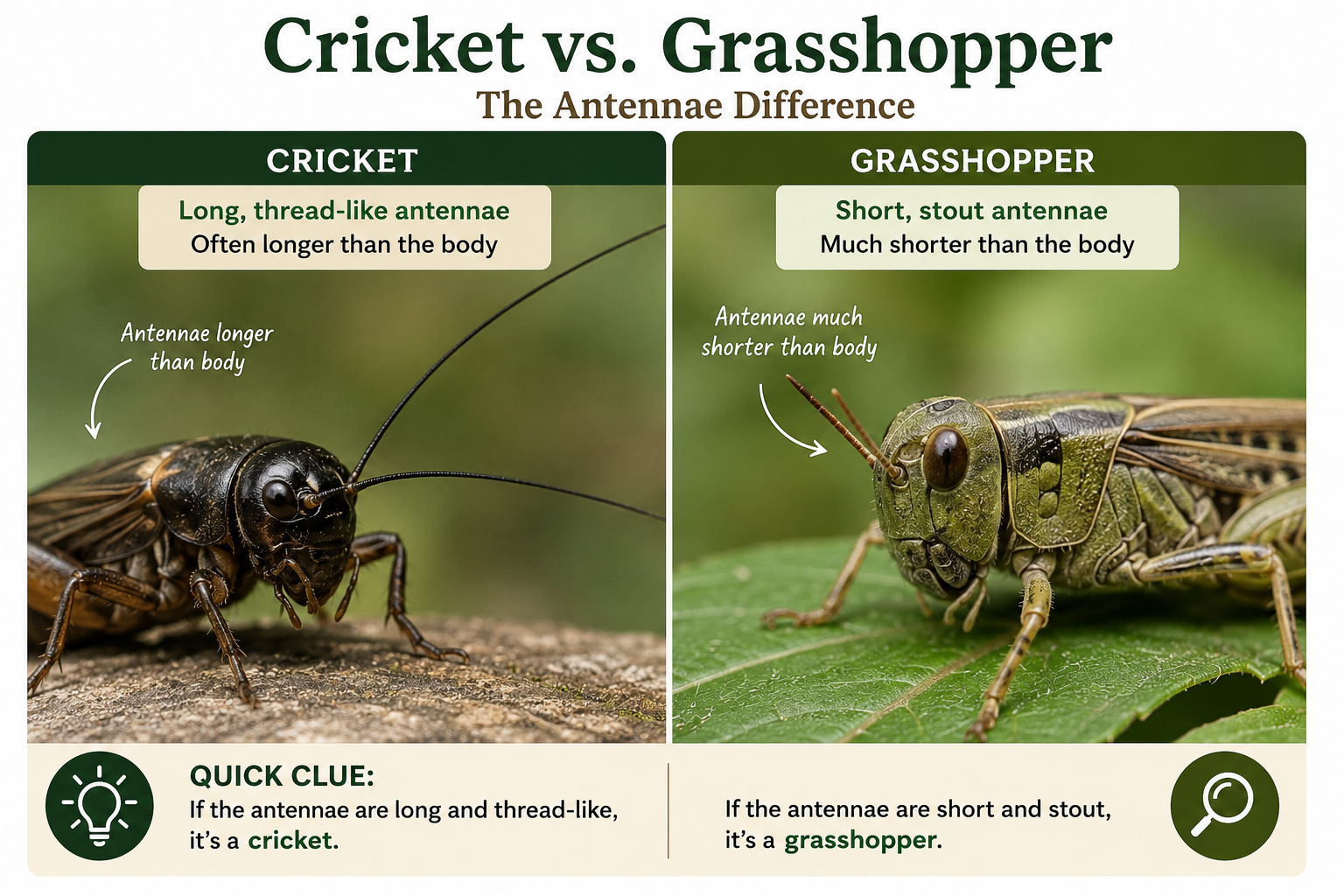 If you hear steady music in the dark, you are likely hearing a cricket. If you hear a sudden click or buzz as something leaps from your path at midday, it’s probably a grasshopper.
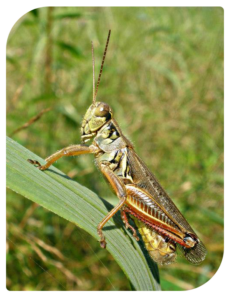
But one of the easiest ways to tell them apart is by their antennae. Crickets have long, thread-like antennae that can be longer than their bodies, while grasshoppers have much shorter antennae.
Who Chirps the Loudest?
Crickets are the more consistent musicians. Male crickets produce their familiar chirp by rubbing their wings together in a process called stridulation—the production of sound by rubbing body parts together. Each species has its own rhythm, and the chirping often speeds up as temperatures rise.
Grasshoppers make sound differently. Some rub their hind legs against their wings. Others create a snapping or crackling noise during flight. Their sound is often sharper and less rhythmic — more punctuation than song.
So who is louder? It depends.
Surprisingly, neither is consistently louder than the other. A cricket’s steady nighttime song often seems louder simply because the world around it has grown quiet. A grasshopper’s buzz may carry farther on a hot afternoon, but it is brief. One fills the night with music; the other punctuates the day with sudden sound.
Why Make Noise at All?
For both insects, sound is a form of communication. Male crickets chirp to attract mates and, at times, to establish territory. Grasshoppers also use sound during courtship or as a warning. What sounds like background noise to us is a matter of survival for them.
 What Do They Eat?
Crickets are opportunistic feeders. They eat plant material, seeds, fungi, and even decaying organic matter. By feeding on decaying plant material, crickets help speed decomposition, returning nutrients to the soil so new plants can grow.
Grasshoppers are primarily herbivores. They feed on grasses and leaves, shaping plant growth in open areas. While large populations can damage crops, in balanced ecosystems, they are part of the natural rhythm of plant and insect life.
Both species are food for birds, frogs, lizards, and small mammals. Remove them, and the food chain weakens.
How Do They Help Us?
Crickets signal environmental health. They are sensitive to temperature and moisture, and their activity tells us about the balance of the habitat. Their steady chirping marks warm evenings and shifting seasons.
Grasshoppers influence plant communities and serve as indicators of field and grassland conditions. Their sudden leaps remind us that life is active even in spaces we think are still.
If their familiar chirps were to fade entirely, it might signal more than simple quiet. Habitat changes, heavy pesticide use, or extreme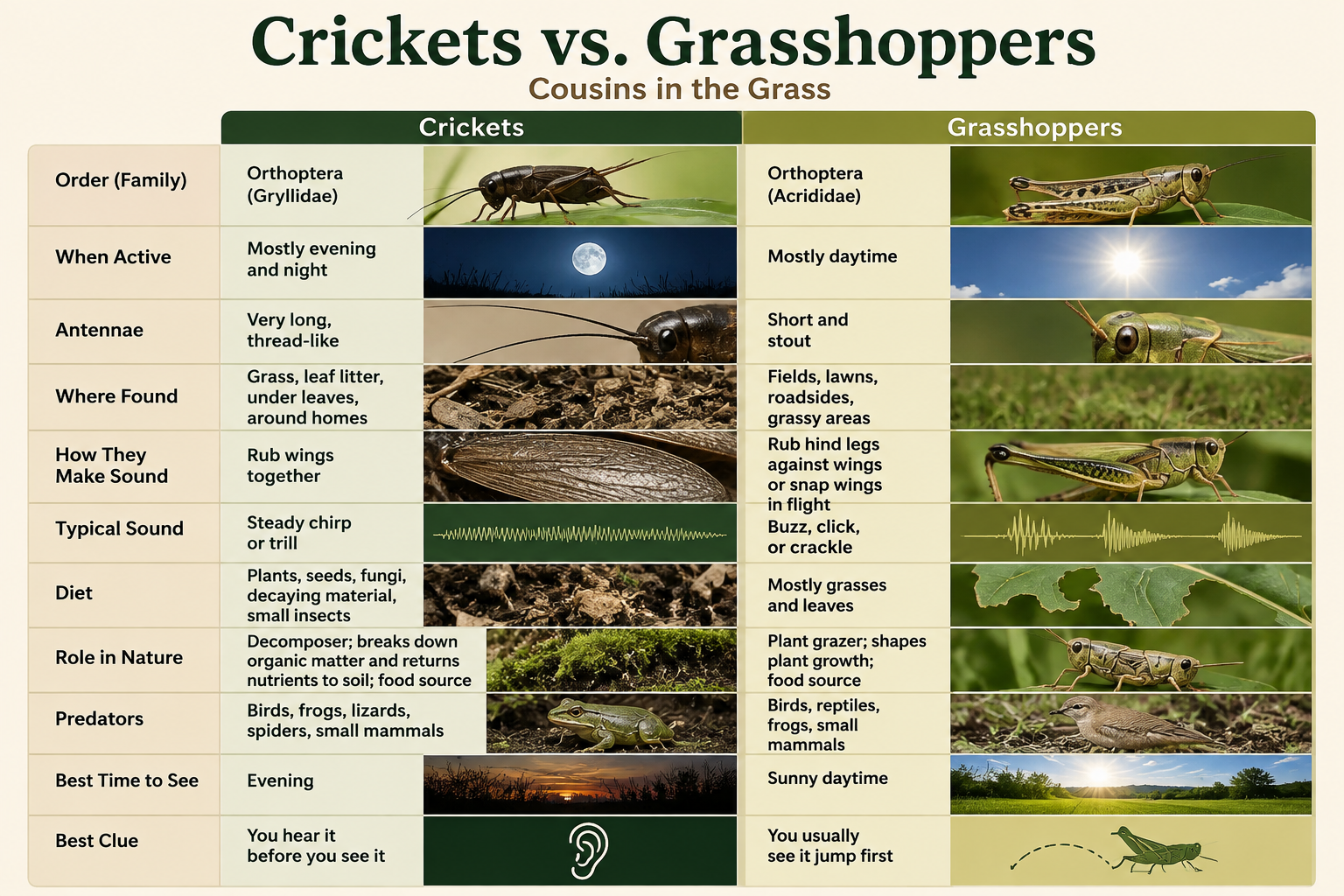 weather can reduce insect populations. Because crickets and grasshoppers sit near the base of the food web, their absence would ripple outward, affecting birds, reptiles, and small mammals that depend on them.
Development also plays a role. As fields become neighborhoods and native ground cover is replaced with uniform lawns, the habitat shifts. Some crickets and grasshoppers adapt, while others decline. The change is rarely dramatic at first. Instead, it is gradual — fewer voices in the grass, a quieter edge along the field.
Cricket and grasshopper populations naturally rise and fall over time, but widespread disappearance is usually tied to significant environmental disruption. In healthy mixed habitats like those found throughout much of Clay County, they remain common.
Have They Always Been Here?
Yes. Crickets and grasshoppers have existed in North America for millions of years.
Long before roads, neighborhoods, or even the first people arrived in Florida, these insects were already part of the landscape, filling warm evenings and open grasslands with their song.
Listening Differently
So the next time the evening settles and the air begins to pulse, pause for a moment. What are you really hearing?
Both insects are small and often overlooked, yet they shape the systems we live in. Sometimes the most ordinary sounds are not noise at all — they are proof that the world around us is working as it should.