 Budgets often seem like dry documents full of numbers and spreadsheets. But how a budget is created can quietly influence what an organization achieves and what it sacrifices.
Years ago, while working with a local quasi-governmental authority, our organization underwent a significant shift in its budgeting approach. A new Chief Operating Officer (CCO) from the private sector introduced zero-based budgeting, a method he had found successful in business.
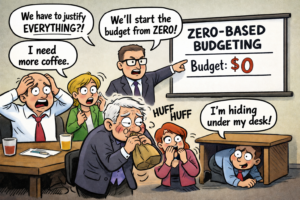
The reaction from managers and department heads was immediate—and not very positive. Most of us had always prepared budgets the same way, so this new method forced us to rethink our approach.
It’s understandable that the shift felt uncomfortable. In many organizations, a person’s role—and even their compensation—has long been tied, at least in part, to the size of the budget they managed. Over time, this reality could quietly encourage budget growth. When every dollar had to be justified from the start, it didn’t just change the numbers. It also challenged long-standing assumptions about status, responsibility, and how work was evaluated and compensated.
How Most Budgets Are Built
Many organizations use incremental budgeting.
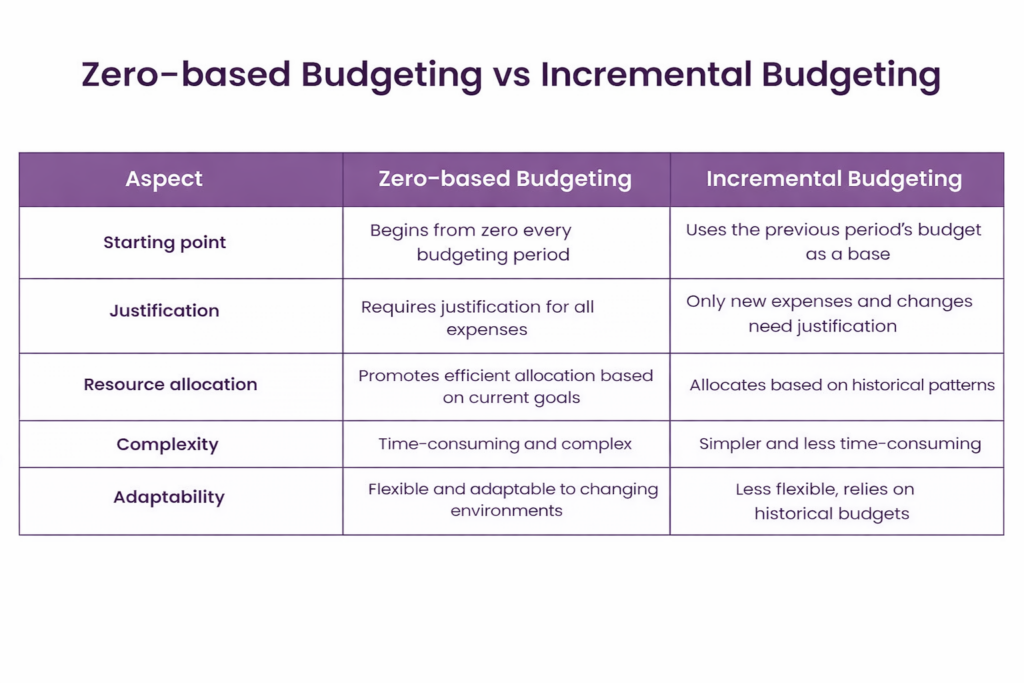
Under this approach, the previous year’s budget serves as the baseline for the new budget. Departments review their current funding levels and propose adjustments—often small increases or decreases—to cover expected costs for the coming year. The process is simple:
- Begin with last year’s approved budget
• Adjust amounts where necessary
• Submit the revised totals for approval
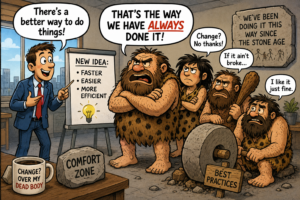 Because the prior budget serves as the foundation, many programs and expenses continue year after year with little review. The process is efficient and familiar, but it can also allow spending habits to persist simply because they have always been in place.
The Shift to Zero-Based Budgeting
The new COO’s system completely changed that familiar process. Instead of starting with last year’s budget, every department had to start from zero dollars. Each manager was required to justify every expense as if it were being proposed for the first time. Nothing was automatically carried over just because it had existed the previous year.
To do this, departments prepared what were called decision packages. These were brief explanations of an activity or expense and why funding was necessary.
Each package had to answer questions such as:
- What is this program or activity?
• Why does it exist?
• What does it cost?
• What happens if it is reduced or eliminated?
Managers then had to present these packages and rank their importance.
Ranking What Matters
One of the most difficult parts of the process was determining how important each item truly was. Expenses were organized into categories such as:
- Very Important
• Important
• Marginal
• Eliminate
This forced managers to carefully consider priorities. If funding needed to be cut, the lower-ranked items would be eliminated first.
For many of us, this was a completely new way of thinking about budgets. The first year was especially tough because it required far more analysis than the system we had been used to.
What the Process Revealed
Once the decision packages were reviewed, something interesting began to happen.
Some programs proved more valuable than expected and gained stronger support. Others were found to be outdated or unnecessary. A few expenses remained simply because they had been included in the budget for many years.
By analyzing every activity from the ground up, the organization gained a clearer understanding of where resources were genuinely needed.
A Difficult First Year
The first year of zero‑based budgeting was easily the hardest. Managers had to rethink long‑standing practices and justify decisions that had once gone unquestioned. Preparing decision packages required time, discussion, and sometimes uncomfortable honesty about which activities truly mattered.
But once the initial work was done, subsequent years became much easier. The process provided a clearer understanding of how the organization functioned and where its priorities should lie.
A Lesson in Looking Again
What began as a change many people resisted gradually became a valuable planning tool.
Starting from zero prompted the organization to ask a simple yet powerful question: If we were starting today, would we still choose to spend money this way?
Sometimes taking a step back and starting over is exactly what helps an organization see itself more clearly.