
The First Layer: Why the Smallest Essentials Matter Most
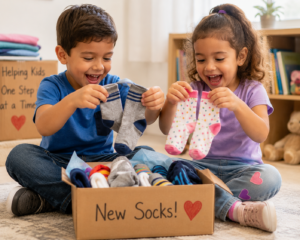 When people think about children going to school without what they need, they usually picture the obvious things first: a backpack, a lunch, a coat, and a pair of shoes. But some of the most important things a child needs are the ones no one even notices.
When I was with Communities In Schools (CIS), we learned that some children were arriving at school without socks or underwear. At first glance, these may seem like small items—so small that adults with full drawers at home may barely think of them. Yet to a child, they can mean the difference between comfort and distraction, confidence and embarrassment, and cleanliness and irritation.
It also revealed something important about poverty: when money is scarce, families often must make decisions based on what is visible. A shirt, a pair of pants, or a pair of shoes may feel urgent because others will notice them. Socks and underwear are hidden beneath the surface. They are easy to postpone and easy to overlook, and sometimes impossible to replace when every dollar has already been claimed by rent, food, transportation, and utilities. But children still feel the absence of those things, even when no one else can see it.
A child who goes without socks is not simply missing an accessory. Socks cushion the feet, absorb moisture, reduce rubbing, and help protect the skin inside a shoe. Without them, a child may spend the day walking on seams, sweating into shoes that never fully dry, or developing blisters and sore spots that make every step more uncomfortable.
In warm weather, damp feet can cause odor, skin breakdown, and fungal irritation. In cooler weather, socks provide warmth that children may not know how to ask for but still need.
 Underwear is far more than a basic clothing layer. For young children, clean underwear is essential for hygiene, skin protection, and comfort. Children’s skin is sensitive. Dampness, friction, poor fit, and prolonged wear can cause irritation, rashes, and discomfort that adults may not immediately recognize.
Pediatric guidance often emphasizes keeping the area clean and dry, wearing breathable fabrics, and changing underwear regularly—not because it is a matter of appearance, but because it is part of a child’s well-being. That physical well-being follows children into the classroom.
A child distracted by wet feet, sore heels, itchy skin, or the discomfort of wearing yesterday’s underwear brings something into the school day that many classmates never have to think about. It may not show up on a test paper, but it can still shape the day. It can make sitting still, concentrating, and participating harder. It can add a quiet layer of stress to a child already trying to manage the business of being young in a public place.
There is also the matter of dignity, which can be difficult to measure but easy to recognize when it is present.
At CIS, when children received new shoes, they were often delighted—but many were just as excited, or even more so, about getting a pair of socks. That reaction said something. It suggested that what adults might dismiss as “small” did not feel small to the child receiving it. A new pair of socks meant softness, cleanliness, comfort, and something that was just theirs.
Underwear meant privacy protected, embarrassment reduced, and one more worry quietly lifted.
For children, these items are not just fabric. They are part of feeling put together, cared for, and ready to move through the world without discomfort drawing attention to itself all day long.
That may be one reason socks and underwear are among the hardest items for schools, shelters, and community programs to keep stocked. Shirts and pants can be donated secondhand. Coats can be passed along. Shoes can sometimes be, too.
 But underwear must be new. Socks are worn hard, easily lost, and rarely make it into a donation bag in usable condition. As a result, some of the most basic items are among the hardest to provide.
Yet they are often the things children need most.
There is a lesson in that. When communities talk about helping children, we naturally think in broader categories—education, nutrition, transportation, housing, and safety. Those matter enormously. But sometimes support also lives in the smallest details of daily life: a clean pair of socks, fresh underwear, shoes that do not hurt, and clothes that let a child sit in a classroom without thinking about discomfort every few minutes.
These are not glamorous needs. They do not photograph dramatically. They are not the sort of things most people brag about donating.
But they matter because children live in their bodies before they ever succeed in a classroom. If their feet hurt, their skin is irritated, or they feel unclean, exposed, or embarrassed, that experience follows them to school. It goes with them to the reading table, the lunchroom, the playground, and the nurse’s office. It shapes how they move, how they focus, and sometimes how they feel about themselves.
A child does not need to understand the economics of scarcity to know when something basic is missing. They only know whether they are comfortable, whether they feel clean, and whether the adults around them seem to understand that these things matter.
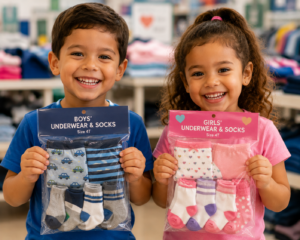 Socks and underwear may be hidden from view, but they are not small. For many children, these items are part of what makes school manageable. They protect health, support hygiene, reduce discomfort, and preserve dignity in ways that are easy to overlook until you work closely with children who go without them.
Sometimes the things that matter most in childhood are not the first things the world notices.
For many children, the first layer isn’t just clothing. It’s comfort, health, and dignity. And sometimes it’s the first reminder that someone cares.
Or even more simply, sometimes the first layer isn’t made of cotton. It’s made of care.