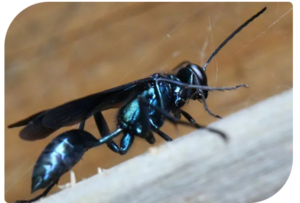
 Most people don’t celebrate the arrival of a wasp.
When a slender black insect with long legs appears under the porch eaves, the instinct is to swat or spray it immediately.
But this one was different.
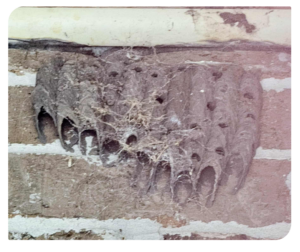
She didn’t hover aggressively. She didn’t circle. She didn’t seem interested in us at all. She carried small clumps of mud, carefully packing them into a narrow tube beneath the overhang.
Like every creature at my house, I named her. She became Willie the Wasp.
And Willie, it turns out, is not the kind of wasp most people fear.
 What is a Mud Dauber?
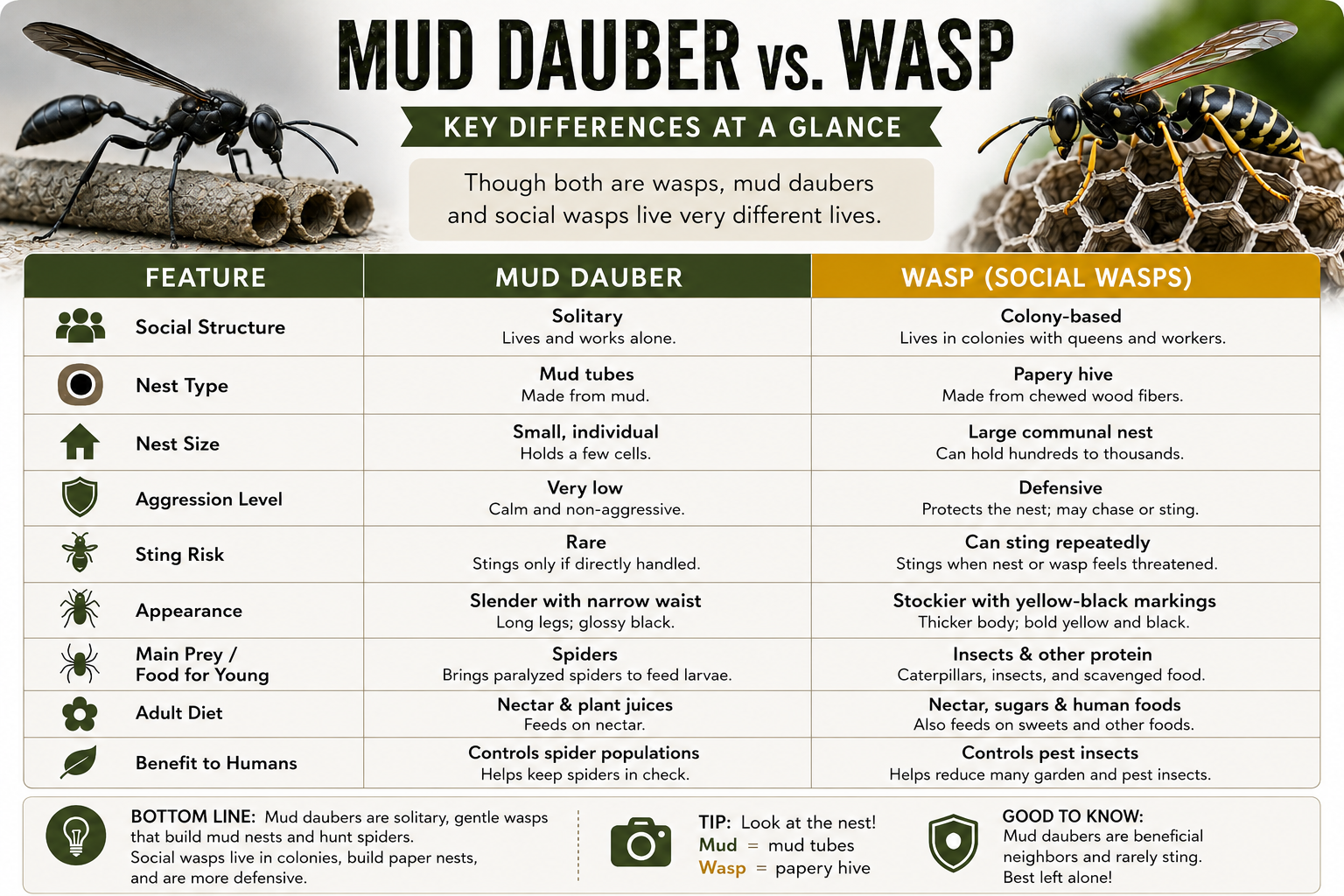
Mud daubers are technically wasps — but they are not like yellow jackets or the wasps most people worry about.
Yellow jackets live in colonies. They defend their nests and sting when threatened.
Mud daubers are solitary, with each female building and provisioning her nest alone rather than living in a colony. There is no swarm, army, or territorial defense. They rarely sting unless physically handled.
In other words, Willie has no interest in us at all. We humans tend to assume every creature notices us, but most don’t.
Here’s What Willie Actually Does
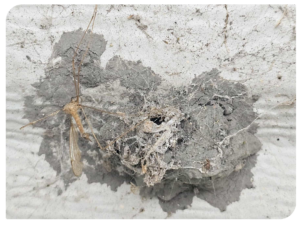 Mud daubers hunt spiders. They paralyze them and seal them in small mud chambers to feed their young. It sounds harsh, but it’s simply nature balancing itself.
That means fewer spiders building up around porches and windows — no chemicals involved — natural pest control happening right outside our doors.
Even exterminators often acknowledge that mud daubers are beneficial because they reduce spider populations without causing problems of their own.
Mud daubers don’t make honey. They don’t live in hives. They don’t swarm or defend a queen.
They drink nectar occasionally, but they aren’t major pollinators like bees. They don’t compete with honeybees or threaten gardens.
They simply build, hunt, and move on.
What Else Should We Know About Them?
Seeing mud daubers in Clay County usually indicates something else, too.
- There is available water or moist soil for mud.
- Spider populations are healthy enough to sustain them.
- The environment has not been overwhelmed by chemicals.
Why Do They Alarm Us?
Mostly because of the word “wasp.” It’s a label that groups very different insects together. But behavior matters more than labels. Mud daubers behave nothing like the wasps that cause backyard panic.
Willie never chased anyone, hovered over our food, or even seemed aware of us. She just worked.
Under Our Own Roofline
We don’t often notice the small labor happening around us. Yet under our own roofline, a solitary insect was building, hunting, and quietly helping maintain the balance of life in our yard.
Sometimes the creatures we rush to eliminate are the very ones working for us.
Willie the Wasp may not look friendly, but she isn’t our enemy. She’s just part of the neighborhood.
Just for the record, I grew up calling them “dirt daubers”—and I probably always will.
By: Sandra Hartley