
“Not Everything Is What It Looks Like in the Produce Aisle”
 The idea for this article didn’t come from a science book or a walk through a farmers’ market. It came from my dentist’s office.
I was sitting in the chair, making small talk, when a dental assistant casually mentioned that strawberries aren’t berries—bananas are. It was said lightly, almost as a joke, the kind of comment meant to pass the time. But it landed with a quiet thud of curiosity.
That’s often how it happens. Ideas don’t always announce themselves. Sometimes they arrive in ordinary places, in offhand remarks, reminding us that the everyday world still has plenty to teach us if we’re paying attention.
Most of us feel confident in the produce aisle. We know what things are. Apples are fruit. Lettuce is a vegetable. Strawberries are berries. Bananas are… well, bananas.
It’s comforting, that sense of certainty. The world feels orderly when labels line up with expectations.
But Then There’s the Strawberry
Despite its name and reputation, the strawberry isn’t a berry. Botanically speaking, it doesn’t qualify. The banana, on the other hand—the long, yellow fruit we peel without a second thought—is.
That small fact has a way of stopping people mid-sentence. It’s not shocking, exactly. Just unsettling enough to make you reconsider how much of what we “know” rests on habit rather than on understanding.
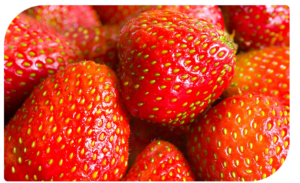
A strawberry looks like the most obvious berry imaginable. Sweet, red, bite-sized, and dotted with what we casually call “seeds.” But here’s the quiet detail most of us never notice: A true berry grows from one flower with one seed-making center. One flower. One center. One fruit.
A strawberry doesn’t form that way.
If you look at a strawberry flower before the fruit develops, the yellow center isn’t just one center — it’s packed with many tiny ones. Each of those tiny centers becomes one of the little specks on the outside. Those specks aren’t just seeds. Each is a tiny fruit with a seed inside.
The red part we enjoy isn’t the fruit at all. It’s the flower base that swells and holds all those tiny fruits together. So, a strawberry isn’t one fruit. It’s many tiny fruits resting on a cushion.
And that’s why, botanically speaking, it isn’t a berry.
What Is a Real Berry?
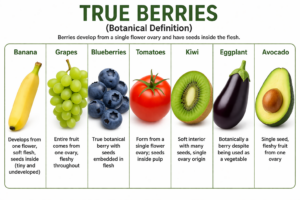
If you’d like an example of a true berry, look at a blueberry or a grape.
When you slice a blueberry open, the seeds are neatly tucked inside the flesh. The entire fruit develops from a single flower with one seed-making center. The same is true for grapes—and yes, even tomatoes.
They may not all fit our mental picture of a “berry,” but they follow the botanical rule: one flower, one center, one fruit.
But the Banana
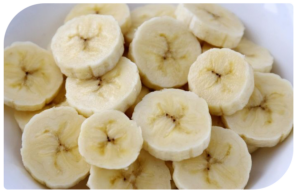 The banana, meanwhile, quietly checks all the botanical boxes.
It develops from a single flower with one seed-making center. That single structure grows into the entire fruit. Even though modern bananas have been bred to have soft, nearly invisible seeds, they still follow the same developmental pattern.
Although bananas grow in towering clusters, they don’t come from trees. The banana plant is technically a giant herb, with its “trunk” made of tightly packed leaves rather than wood.
By scientific definition, the banana is a true berry, but the strawberry is not.
Humans vs. Science
At this point, some people feel betrayed. Others laugh. A few immediately want to tell someone else, the way you pass along a good riddle or an unexpected piece of trivia. But the more interesting question isn’t why botany is so strange. It’s why our assumptions felt so solid in the first place.
In everyday life, we sort foods by taste, texture, and use. Sweet foods are fruits. Savory foods are vegetables. Berries are small, soft, and scattered over cereal or yogurt. This system works well for shopping, cooking, and conversation.
 Science, however, asks a different set of questions. It cares less about flavor and more about structure—how a plant reproduces, where its seeds form, and which tissues become edible. When those two ways of organizing the world overlap, we feel confident. When they don’t, we feel surprised.
Neither way of knowing is wrong. They simply serve different purposes.
That a strawberry isn’t a berry doesn’t change how it tastes. That a banana is a berry doesn’t make breakfast any different. But the realization opens a small window, reminding us that the familiar world still holds complexity beneath its surface.
It’s easy to assume that once something has a name, it’s fully understood. Yet even in the most ordinary places—such as a dentist’s office or a grocery store—there are quiet contradictions waiting to be noticed.
The strawberry and the banana don’t require us to memorize botanical definitions or correct strangers at the grocery store. They simply offer a gentle nudge: a reminder that labels are shortcuts, not conclusions.
And sometimes, the most ordinary moments are where the most interesting ideas begin—if we’re willing to notice them.
By: Sandra Hartley