
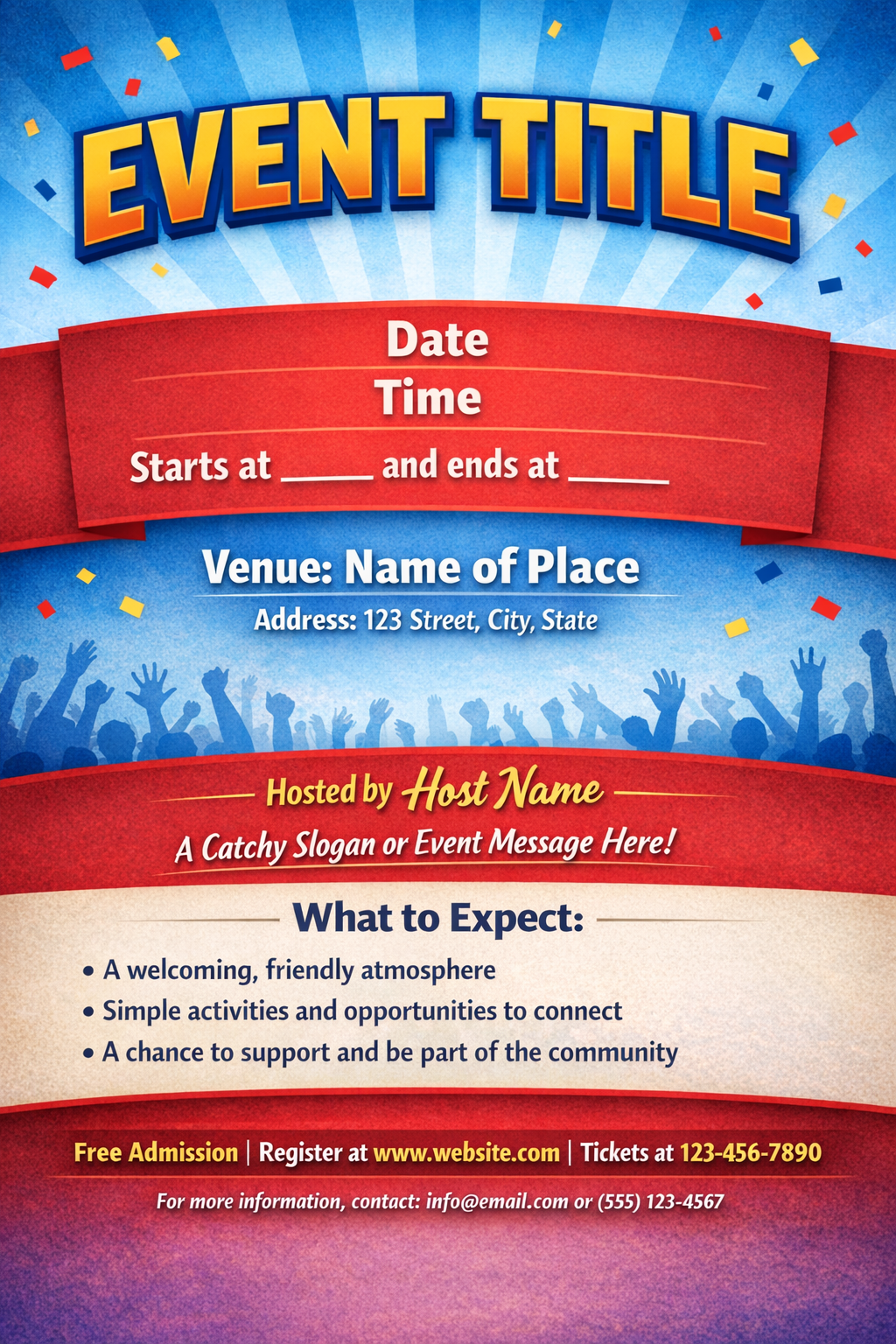
 Community events rely on one simple thing: people knowing about them.
That seems obvious—but how we share that information is more important than we often realize.
A flyer isn’t just an announcement; it’s an invitation.
When someone sees your flyer, they should immediately understand what is happening and how to participate. If they have to guess, search, or assume, the invitation becomes less effective—and often gets ignored altogether.
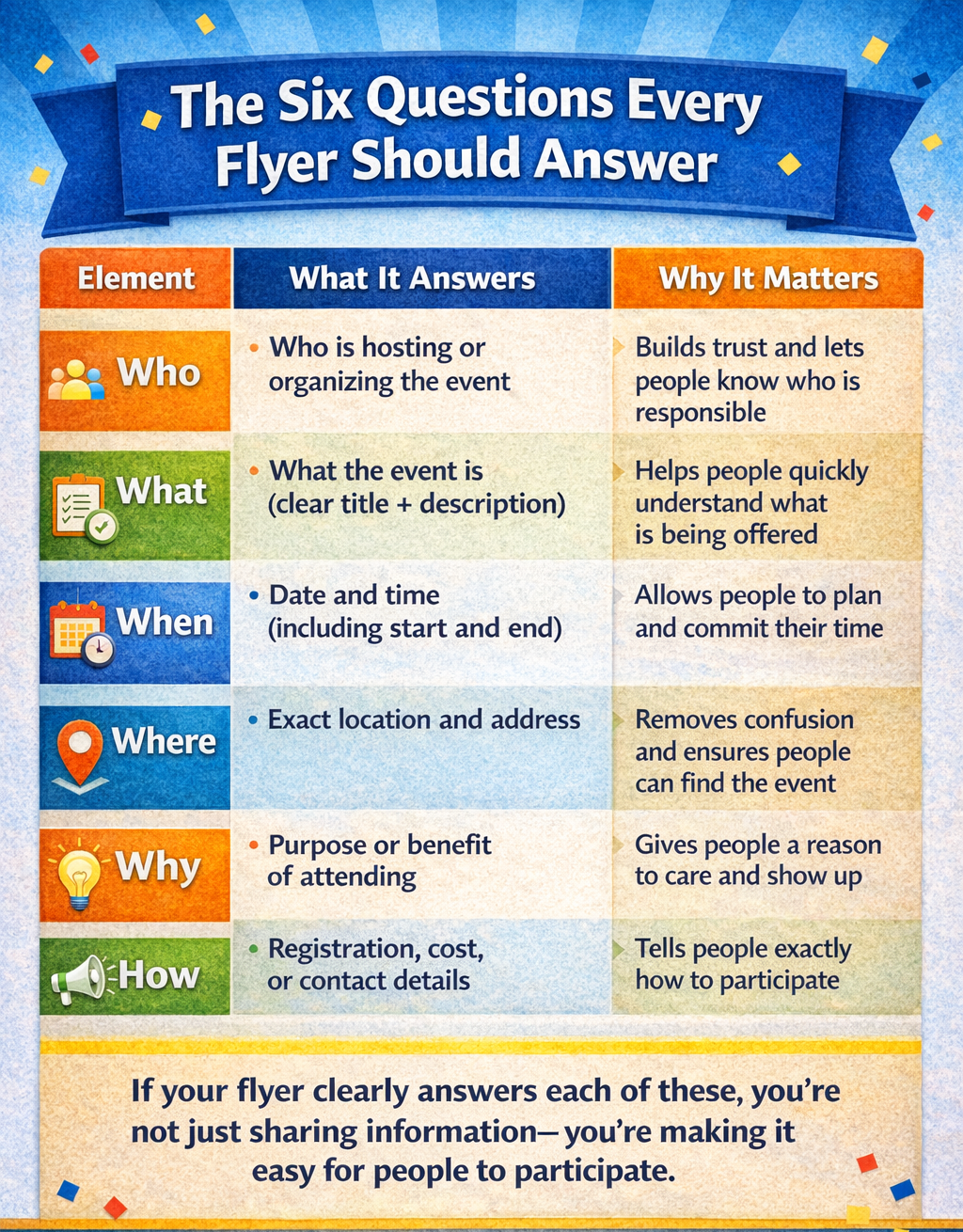
The best flyers share something in common. They answer five straightforward questions:
- Who is hosting the event?
- What is happening?
- When does it take place?
- Where should people go?
- Why should they come?
These questions may seem simple, but they are crucial. Missing even one can cause confusion. If several are missing, most people will just move on.
It’s also important to remember that clarity is more important than creativity. A beautifully designed flyer that omits key details won’t be as effective as a simple one that clearly communicates everything a reader needs to know.
When designing a flyer, it helps to view it from someone else’s perspective. The person reading it doesn’t have the same knowledge you do. They don’t know your usual meeting spot. They aren’t familiar with your group’s routine. They don’t see what seems obvious to you.
What seems complete to you might seem incomplete to someone else.
 A clear flyer makes it easy for people to say yes. It provides the exact location, not just a general area. It offers a brief description of what to expect. It also lets people know whether they need to bring anything or take any action beforehand.
And perhaps most importantly, it addresses the question of why the event is significant.
People don’t attend events just because they exist. They go because something about them is meaningful—whether it’s fun, connection, learning, or support for a cause.
When handling community announcements, one thing is certain: events with thorough, thoughtful details get more attention. Those missing these details are often ignored, no matter how valuable they might be.
Before sharing your next flyer, take a moment to review it as if you’re seeing it for the first time.
Ask yourself: Who, What, When, Where, and Why?
If all the answers are there, you’ve done more than create a flyer. You’ve opened the door for someone to come in.
By: Sandra Hartley