
 At a fundraising event a few weeks ago, I tried to tickle Mike in the ribs while we were taking our picture (which I hate doing). It was just a quick, playful poke like teasing a giggling five-year-old.
Nothing. Not a flinch. Not a squirm. Not even a startled jump. He stood there, calmly smiling for the camera while I poked his ribs as if I were testing a loaf of bread.
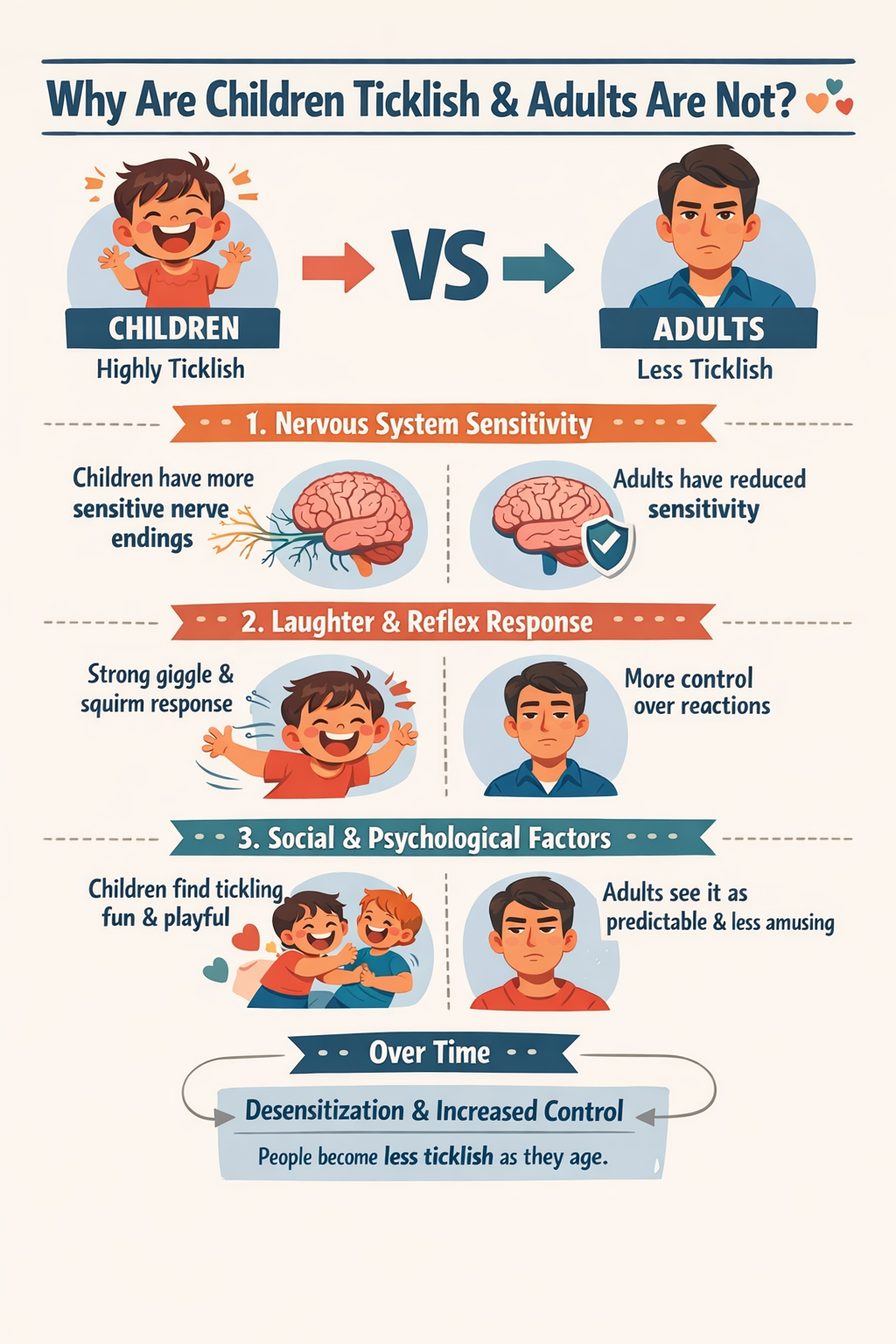
It made me wonder: why are children almost always ticklish to the point of hysterical laughter, while some adults aren’t ticklish at all? It turns out that tickling depends on three simple factors: sensitive nerves, surprise, and a willingness to lose control.
Under our skin, thousands of tiny touch receptors connect to nerves that send signals to the brain. In children, these signals are often loud and immediate. Their brains haven’t fully developed filtering systems that soften sensation, so a quick poke to the ribs can feel bigger — and funnier — than it actually is.
It turns out that tickling depends on three simple factors: sensitive nerves, surprise, and a willingness to lose control. Children naturally have all three.
 Their developing nervous systems make touch feel more intense. They’re not good at predicting what’s coming next, so surprises affect them more. Most importantly, they don’t mind bursting into giggles. In fact, they love it.
 Adults are different. Our brains are highly skilled at predicting touch. When we see a hand approaching, we prepare ourselves. A slight tightening of the stomach muscles can prevent the entire reaction. With a bit of self-control and a desire to maintain dignity, the laughter never even begins.
You also can’t tickle yourself — your brain already knows what your fingers are about to do. No surprise, no eruption. There’s a small clue to this in something we’ve all experienced.
When someone hits a “funny bone,” the sensation isn’t actually funny. It’s the ulnar nerve getting bumped as it passes behind the elbow. This causes a sudden electric shock that runs down the arm into the hand — sharp, unexpected, and slightly disorienting.
Yet people often laugh not because it feels good, but because the body sometimes responds to surprise with laughter. Scientists believe this reaction occurs because the brain briefly assesses whether the sensation is a threat or just harmless touch.
When control slips — even briefly — laughter has the power to soften the harsher aspects of the experience.
Tickling might work in a similar way. A quick touch on a sensitive spot sends rapid signals through the nerves before the brain’s thinking part can respond. The result is a mix of laughter, squirming, and surprise.
Maybe children aren’t just more ticklish because their skin is softer. Maybe they simply haven’t learned to guard the moment yet.
There’s also something tender about the whole idea. Tickling only works with trust. You don’t laugh when a stranger grabs your ribs — you recoil.
Children laugh because they feel safe. Adults sometimes stiffen because we’ve learned to protect our space, balance, and dignity. Maybe that’s part of growing up, too.
Somewhere between childhood laughter and adult composure, many of us traded spontaneous giggles for steadiness.
As for Mike, he has clearly mastered rib-level composure. I, however, might try again to get at least a smile from him.
Sandra Hartley