
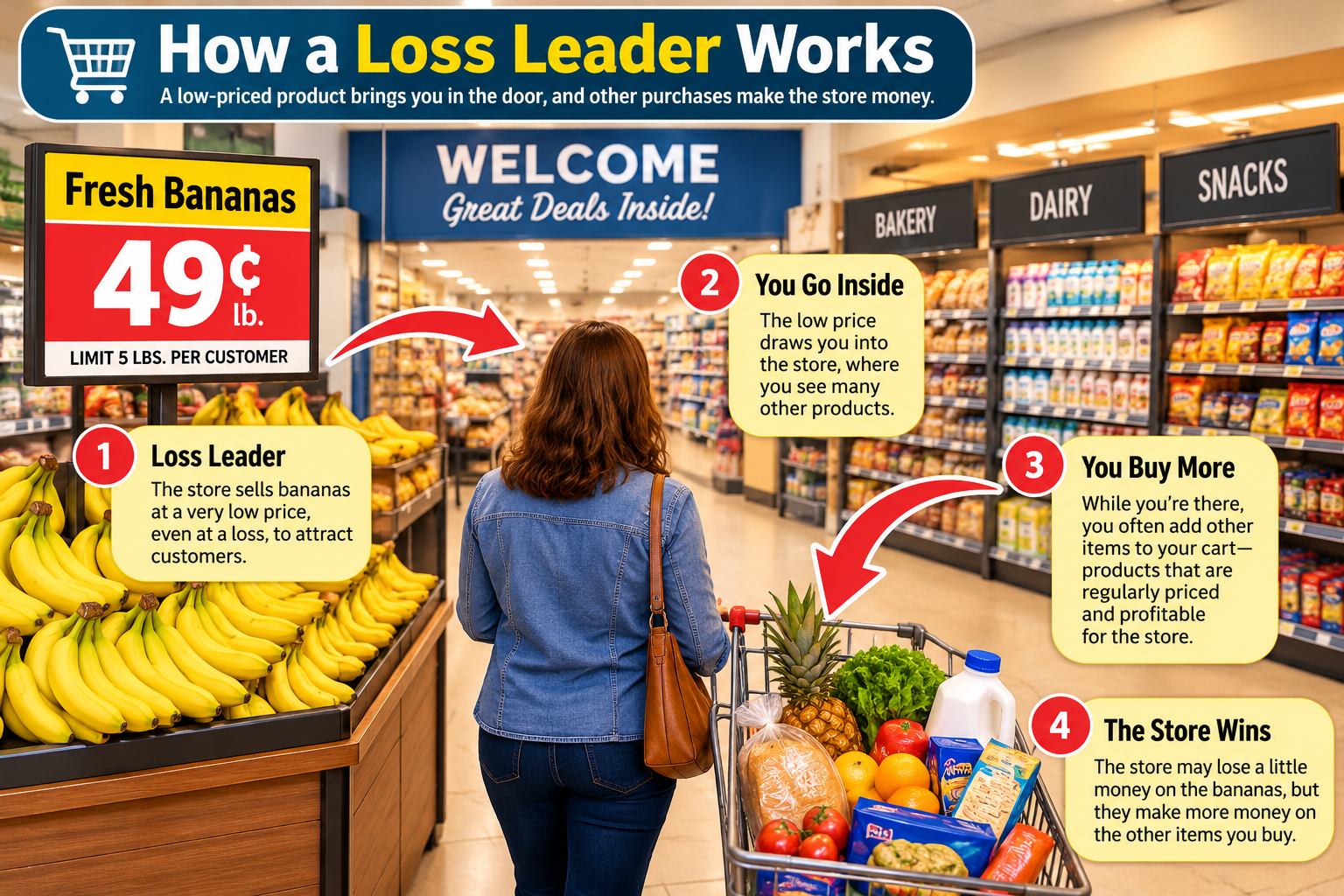
 You see an advertisement for a grocery item at a price that seems almost too good to be true. It might be milk, eggs, bananas, or a holiday turkey.
You decide the bargain is worth a trip to the store. But once you get there, something familiar happens: you leave with far more than the item you came for.
That bargain is a sales tactic used by the retailer. The term for it is a loss leader. The idea is simple: offer a popular product at an unusually low price, sometimes even below the store’s cost. Why is this done? To attract customers who may buy other merchandise while they are there.
For the shopper, it feels like a win. It is typically a win for the retailer as well. The retailer’s calculation is based on the entire shopping basket, not just a single item.
Why Would a Store Lose Money on Purpose?
Imagine a store pays $3.00 for an item and advertises it for $2.50. On that sale, it will lose 50 cents. That sounds like a bad business decision for the seller. However, the shopper might also buy bread, cereal, coffee, candy, and several other items with healthy profit margins. The shopper never really intended to “shop”.
If the additional purchases generate enough retail profit, the visit benefits the seller. The retailer may also hope the shopper discovers the store, enjoys the experience, and returns another day.
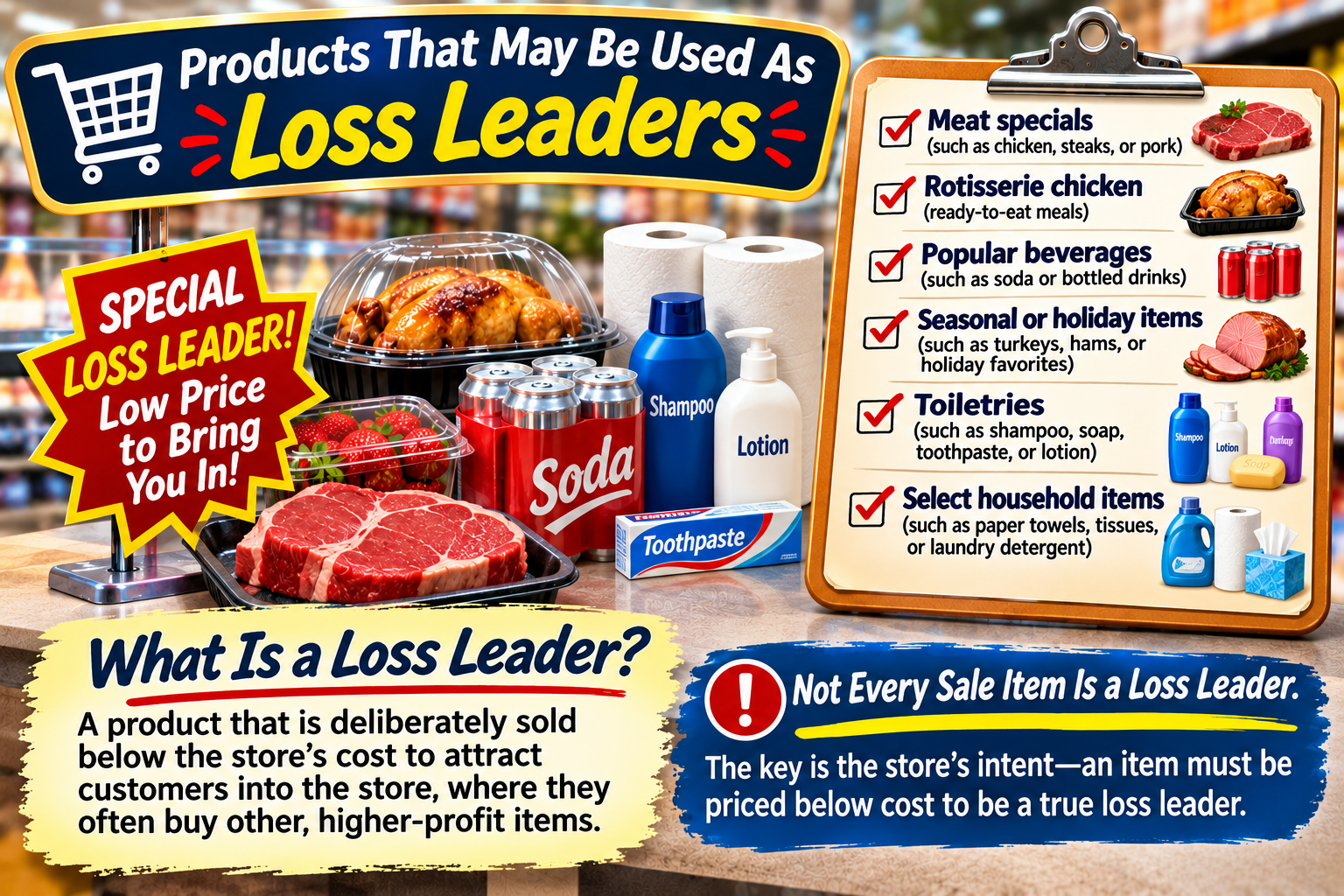 Not every sale item is intended to be a loss leader. Some discounts simply reduce the store’s profit, and some promotions are partially funded by manufacturers. A true loss leader is an item sold at a loss to attract customers into the store.
The Psychology Behind the Bargain
Why does this strategy work? One reason is that a bargain captures our attention. We may focus on the money we save on the advertised item rather than on the total amount we spend. We love a “deal.”
Another reason is convenience. Once we have parked the car and entered the store, picking up a few extra necessities seems practical. We may also notice something we forgot to add to our shopping list—or something we never intended to buy.
Retailers know shoppers make decisions in the moment. Store layouts, prominent displays, and seasonal promotions can encourage browsing. A discount may draw us in, but the surrounding merchandise gives us reasons to stay.
And Then Comes the Checkout
Consider the candy, gum, mints, magazines, and batteries often displayed near the register. These items are not necessarily loss leaders. They are positioned for impulse purchases, in easy-to-grab spots where customers are likely to notice them while waiting to pay. Children often drive these purchases by repeatedly asking for or crying over an item they see at checkout. Adults often give in to quiet the children and get checked out with less embarrassment.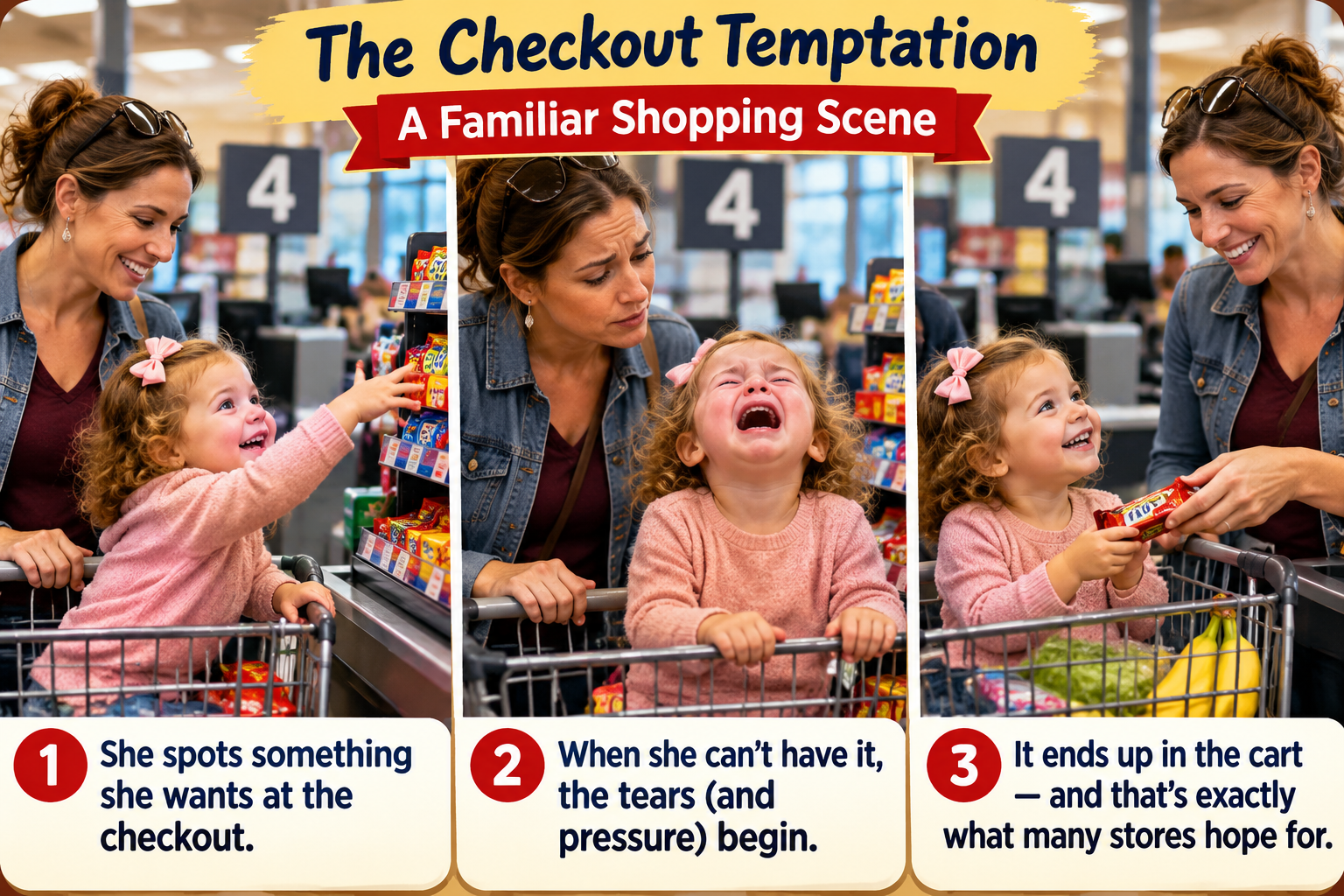
That distinction matters. The deeply discounted item draws the visit, while the checkout display invites an unplanned purchase. Both techniques can influence what ends up in the cart, but they work differently.
A shopper who came for a bargain on bananas might leave with a candy bar, a magazine, and several full-price groceries. The store has intentionally turned one attractive offer into a larger sale.
Can Shoppers Still Come Out Ahead?
Absolutely. A loss leader can be a genuine bargain, especially when it is something you already need. The trick is to judge the whole shopping trip, not just the advertised price.
A list can help. So can comparing unit prices, checking quantity limits, and asking whether an extra item would have been bought anyway. Driving across town to save a dollar may not be worthwhile once time and fuel costs are factored in.
There is nothing wrong with taking advantage of a great sale by buying only the advertised item. The retailer’s strategy does not require you to cooperate!
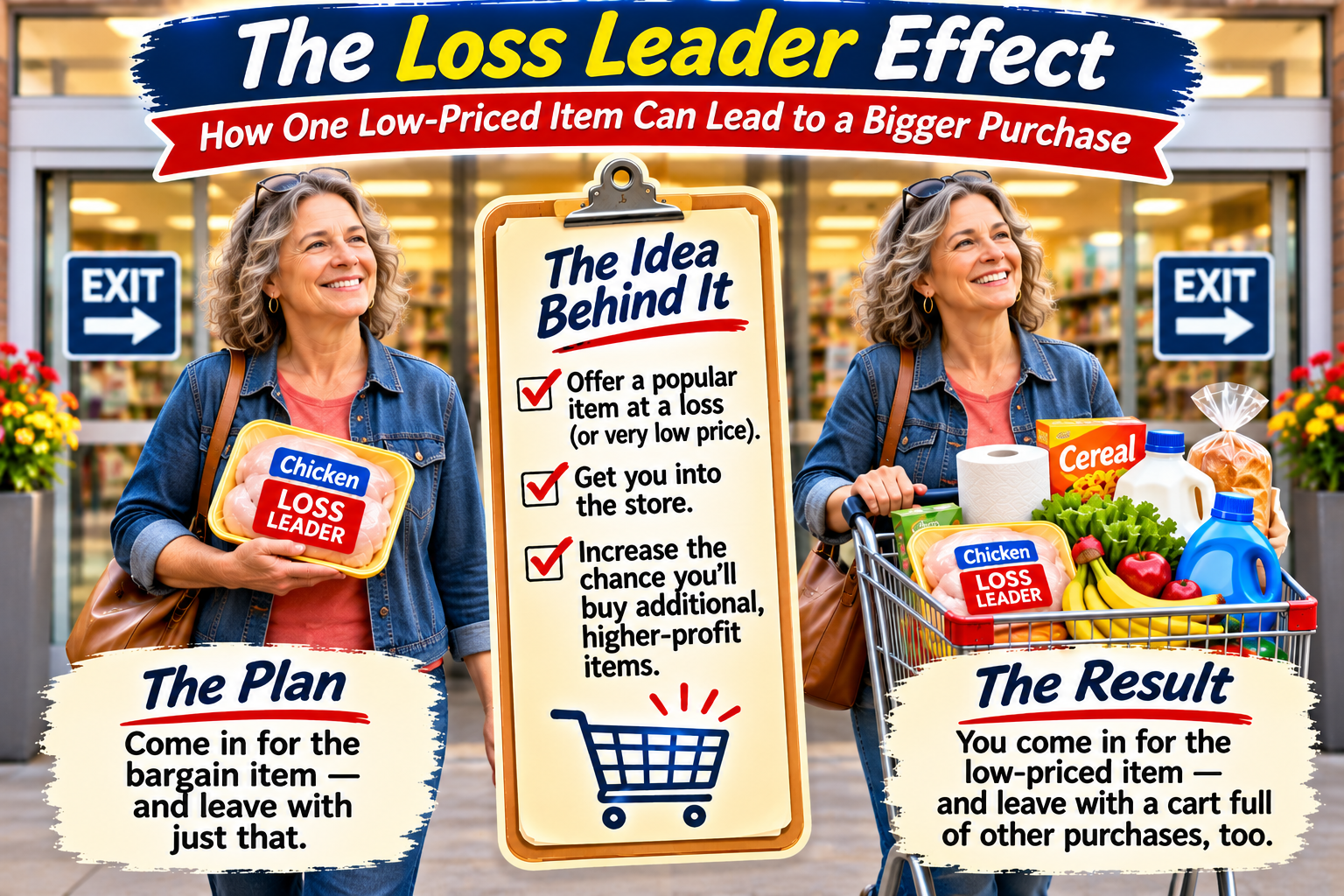 The Next Time You See an Amazing Deal
Remember that the low price may do more than save you money. It may be a well-thought-out invitation to walk you through the door, explore the aisles, and fill a shopping cart.
That is the fascinating part of a loss leader: the store can afford to lose money on one product because it hopes to win the overall shopping trip. So, enjoy the bargain. Just keep an eye on what else follows you to the checkout counter.