
 October is National Bullying Prevention Month, a time dedicated to raising awareness of bullying and promoting kindness, acceptance, and inclusion among children and young people. Most of us probably recognize bullying when we see a child being pushed, hit, or openly threatened. But bullying is not always so obvious.
Sometimes it is a whisper in the hallway. A cruel nickname that will not stop. A rumor passed among friends. A child deliberately left out day after day. An embarrassing photograph shared online.
To understand bullying—and to help stop it—we must first understand what it is.
What Is Bullying?
Not every disagreement between children is bullying. Children argue. Friends get angry with each other. Feelings get hurt. A child may even say something cruel on occasion. These behaviors need attention, but they do not necessarily constitute bullying.
Bullying generally includes several key elements: unwanted aggressive behavior, a real or perceived power imbalance, and behavior that is repeated or has the potential to be repeated.
That power imbalance does not necessarily mean that one child is physically bigger or stronger. Power can come from popularity, social status, group membership, physical strength, or even from possessing embarrassing information about another child. This is one reason bullying can be difficult for adults to recognize.
How Do Children Bully?
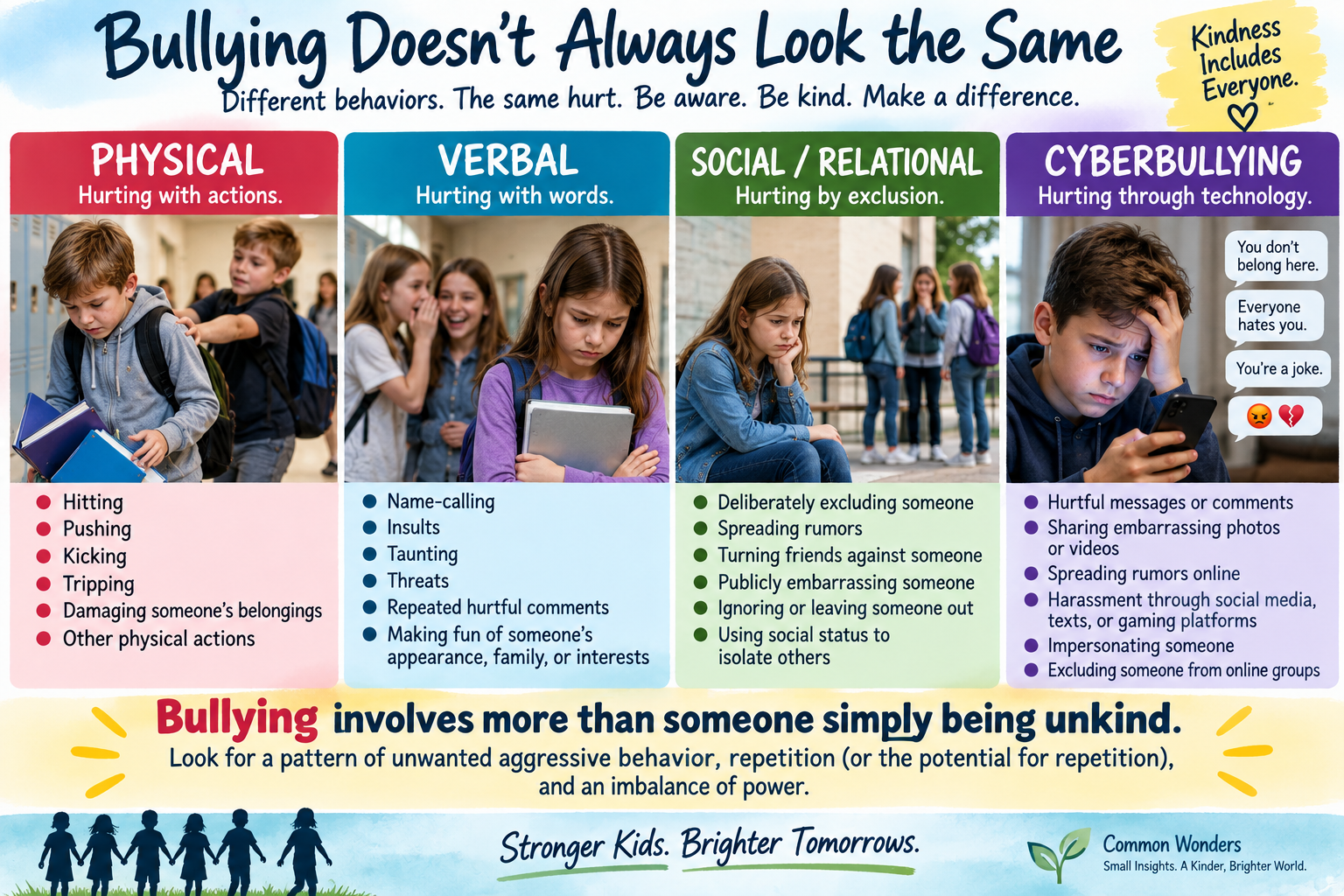
Physical bullying may include hitting, kicking, pushing, tripping, damaging someone’s belongings, or other physical actions. Verbal bullying may include name-calling, insults, taunting, threats, or repeated hurtful comments.
Social or relational bullying can be much quieter. A child may deliberately exclude another child, spread rumors, embarrass someone publicly, or encourage other children not to be friends with someone.
Cyberbullying allows hurtful words, photographs, rumors, and messages to follow a child beyond the school building. What once might have ended when a child arrived home can now continue through phones, social media, messaging, games, and other online spaces.
Why Does a Child Bully?
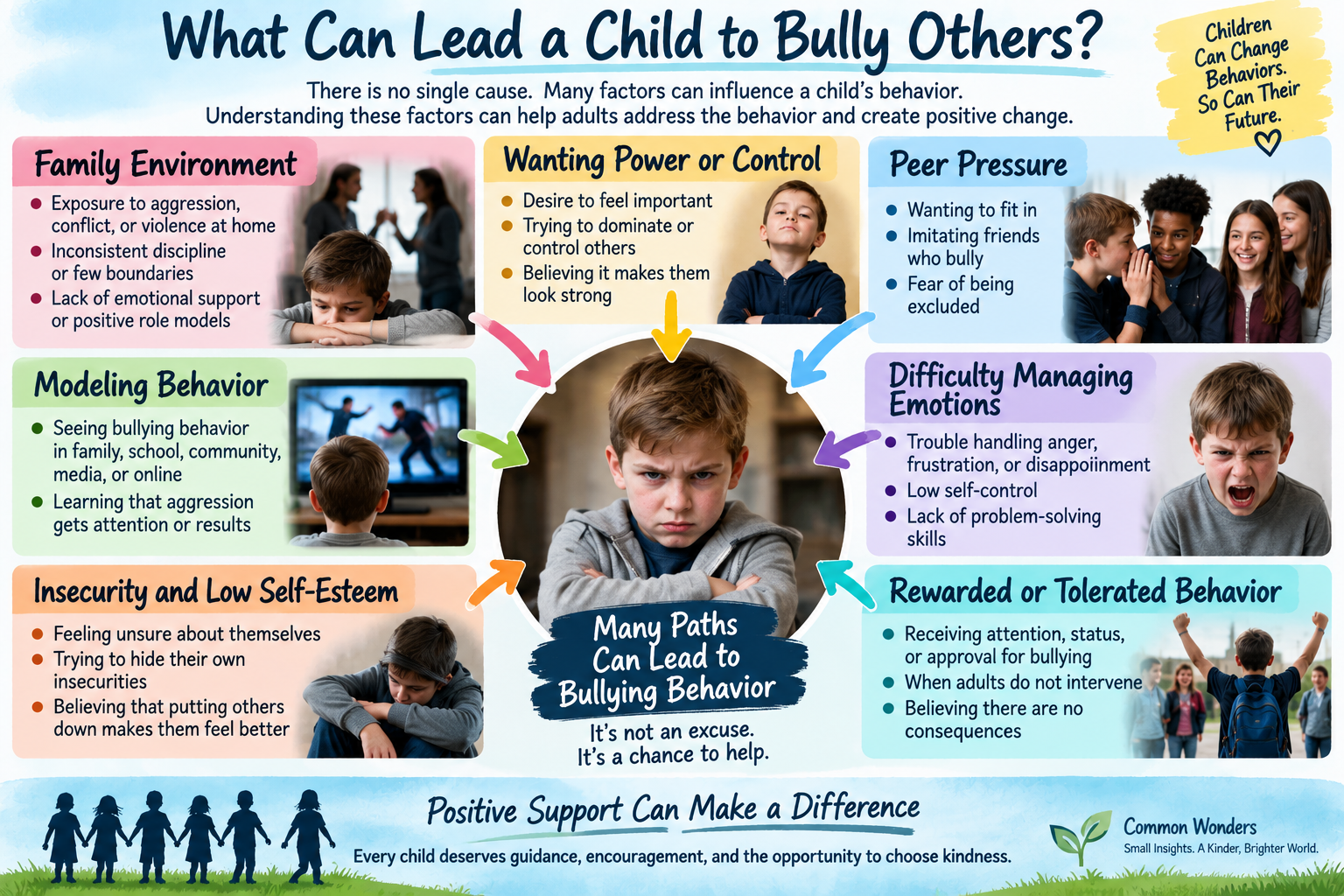
Perhaps one of the most important questions is also one of the most complicated: Why would a child deliberately hurt another child? There is no single answer. Some children bully to gain or maintain social status. Some want to fit in with a group. Others use bullying to control who is accepted and who is excluded.
Family and environment can also matter. Some young people may be exposed to aggression or bullying at home, receive little emotional support, or face inconsistent boundaries and discipline.
Emotions and social skills can play a role as well. Some children who bully have difficulty managing frustration or understanding another person’s feelings. Some have been bullied themselves. Others may feel insecure and discover that intimidating someone else temporarily makes them feel powerful.
None of these explanations excuses bullying. But understanding what contributes to the behavior can help adults do more than simply punish a child and assume the problem is solved. Bullying is a behavior—and behavior can change.
Conflict or Bullying?
This distinction matters. Two children arguing over whose turn it is, two friends becoming angry with each other, or two classmates who simply do not like one another may be experiencing conflict.
Bullying is different. In bullying, one person uses power against another who has difficulty stopping what is happening. The behavior is unwanted and repeated—or likely to be repeated. Recognizing that difference helps adults respond appropriately to both situations.
What Can Adults Do?
The first step may be the simplest: pay attention and listen. A child may not walk up to an adult and say, “I am being bullied.” Instead, something may begin to change.
A child who enjoyed school may suddenly dread going. Friends may disappear. Belongings may be repeatedly lost or damaged. Grades may change. There may be unexplained physical complaints, trouble sleeping, changes in eating habits, or unusual withdrawal from family and activities.
None of these signs automatically means a child is being bullied. But they can be reasons to ask questions—and then truly listen to the answers.
When bullying occurs, children need to know that adults take it seriously. Parents, teachers, counselors, coaches, and other trusted adults can work together to determine what is happening and how to stop it.
And children who engage in bullying need adult attention too. Stopping the immediate behavior is important. Helping a child understand why the behavior is harmful—and teaching better ways to handle emotions, relationships, conflict, and the desire for acceptance or status—may help prevent it from happening again.
Do Children Who Bully Become Adults Who Bully?
It is tempting to draw a straight line from the playground to the workplace. But human behavior is rarely that simple.
Childhood behavior does not determine someone’s future. Children grow, learn, mature, and encounter different environments, and they can change their behavior. Researchers have found that involvement in childhood bullying can be associated with later difficulties, but that does not mean every child who bullies will become an adult who bullies.
Still, it raises an interesting question.
Bullying is usually discussed as though it belongs to childhood. Yet adults can also use power, intimidation, exclusion, humiliation, and repeated aggressive behavior against other adults. The playground may disappear. The behavior does not always disappear with it.