
Author’s Note: Facing the Crow
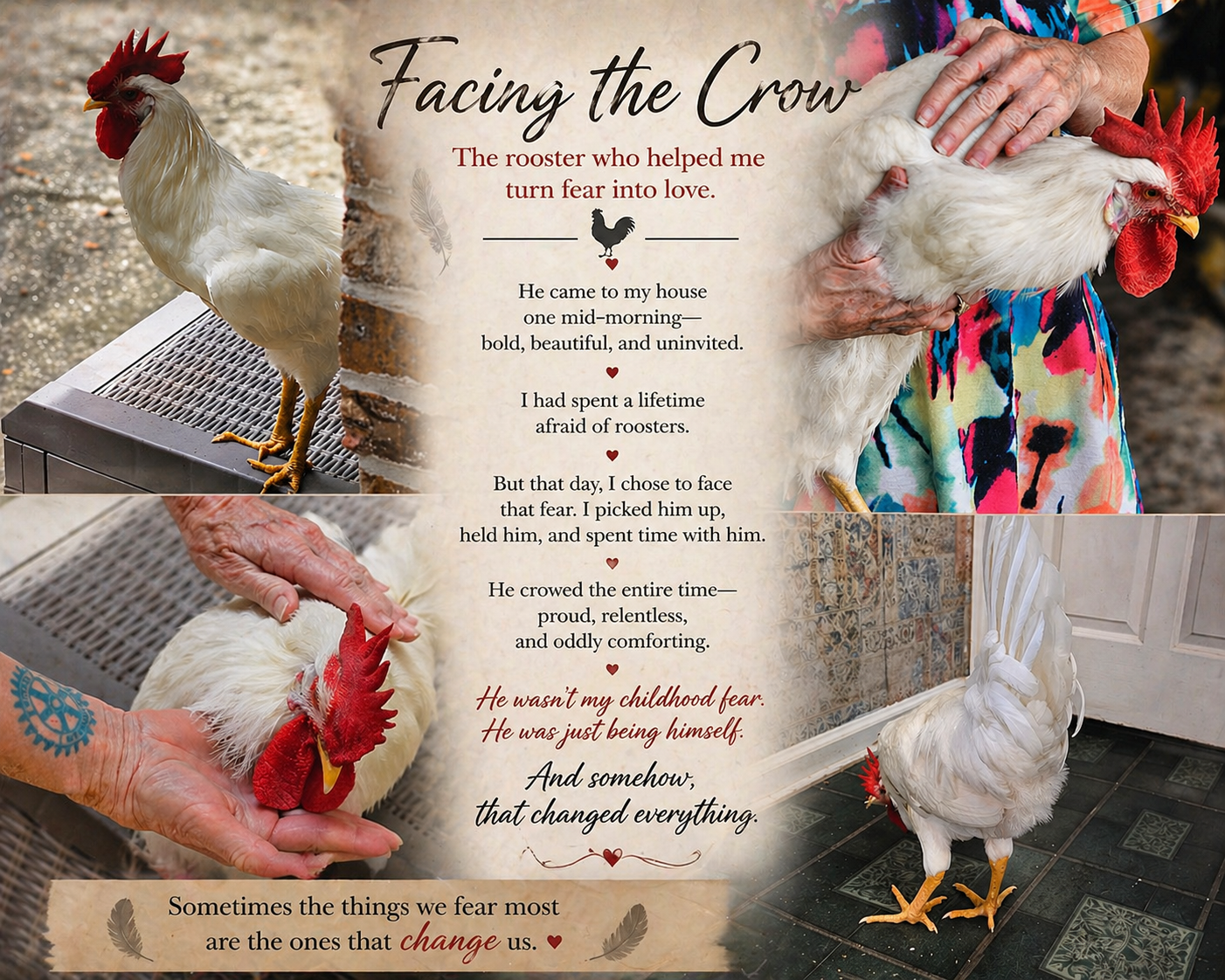
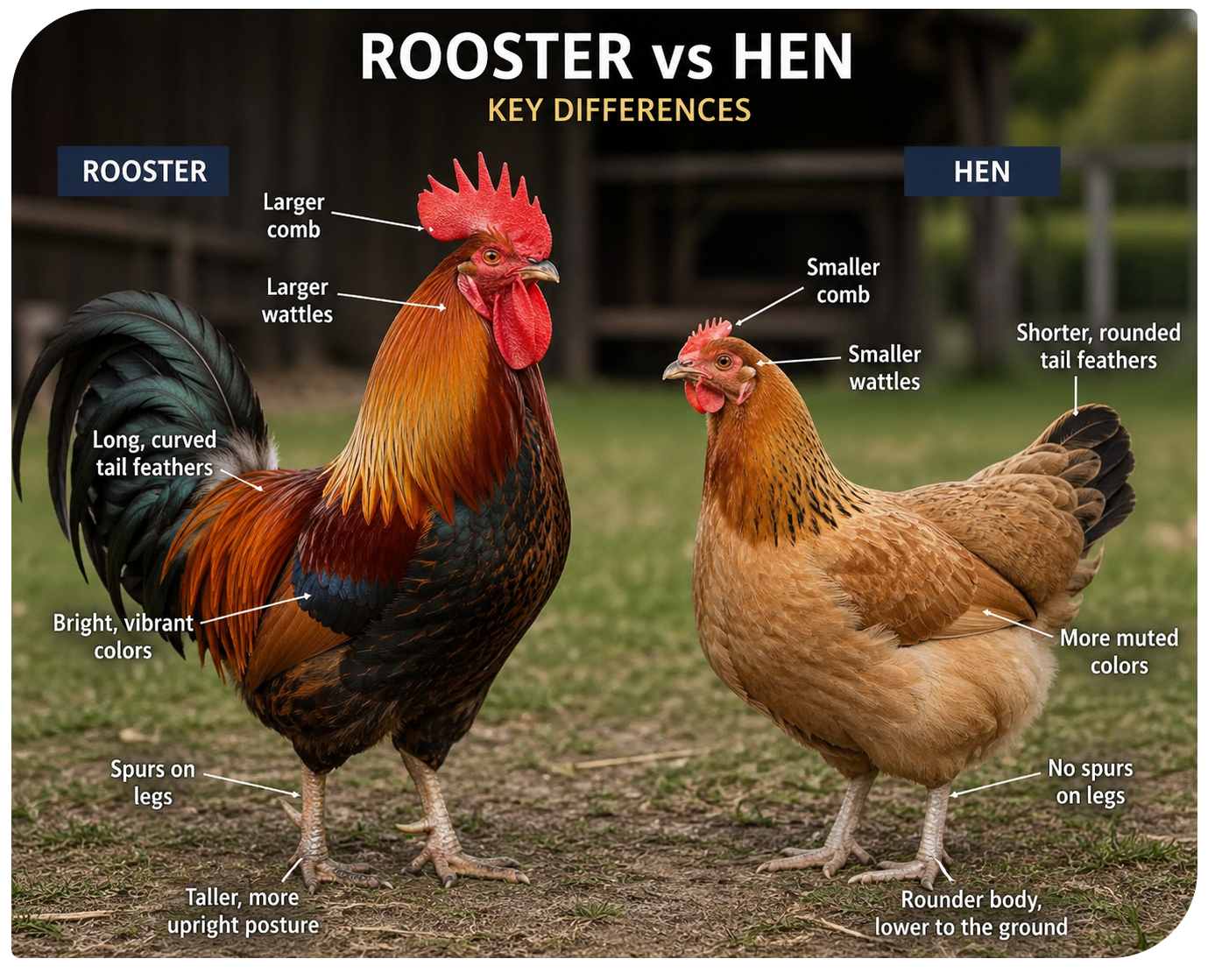 A rooster came to my house one mid-morning a few months ago. I’ve always been scared of roosters. When I was a little kid, ours used to chase me every time he saw me outside, intent on spurring me. But that morning, I chose to face that fear. I picked up our feathery visitor, held him in my lap, spent time with him, and found his family.
He crowed the whole time he was with me — proud, relentless, and oddly comforting. That day, I realized he wasn’t my childhood tormentor. He was simply being himself. Somehow, that eased my fear.
It took me over fifty years to accept that sound. He’s the rooster who inspired this story.
Not Just a Morning Thing
We’ve all seen the cartoon version: a rooster walks to the top of a barn roof, puffs out his chest, and belts out a triumphant “cock-a-doodle-doo” as the sun rises. But anyone who’s spent time around real chickens knows the truth—roosters don’t crow only at dawn. They crow all day, sometimes all night. Sometimes, for reasons that seem to defy logic, science, and common courtesy. So what’s behind all this poultry performance?
 The Science of the Crow
Roosters have an internal clock that prompts them to crow around sunrise, even in the absence of light. Researchers found that their circadian rhythm is so precise that they start crowing about two hours before dawn to stay ahead. Once they start, they never stop. Roosters crow to:
- Declare ownership: “This coop is mine. These hens are mine. That patch of dirt is mine.”
- Respond to rivals: When another rooster crows, the competition begins. A crow-off is in progress.
- Celebrate mating: Yes, they crow after sex. Loudly and repeatedly. Modesty isn’t their strong suit.
- Sound the alarm: Roosters have distinct calls for aerial predators (such as hawks) and for ground threats (such as raccoons). Think of them as feathered security guards with megaphones.
- Express excitement: Sometimes they crow just because they’re feeling good, are bored, or have heard a car door slam.
In short, crowing is a rooster’s way of telling his story. He’s the main character, and he wants everyone to hear it.
When Hens Get Vocal
Now here’s the twist: sometimes hens crow. It’s rare, but it happens—and it usually means a rooster is missing.
When there is no dominant male, a high-ranking hen may start acting like a rooster. She may strut, puff up her feathers, and even crow. This isn’t just imitation; it’s hormonal. A drop in estrogen and a rise in testosterone can change her behavior.
Some chicken keepers report that their crowing hen suddenly stops laying eggs altogether. It’s as if she’s decided, “Fine, I’ll be the rooster now.”
 Chicken Comedy
Let’s be honest: chickens are hilarious. Roosters crow as if they’re announcing breaking news. “I mated! I saw a squirrel! I heard Rooster Steve crow from three coops over!” They’ll crow at sunrise, during lunch, in thunderstorms, and sometimes during your Zoom call.
And when a hen crows, it’s as if your quiet coworker suddenly led a pep rally. Unexpected, impressive, and a little confusing.
Final Thoughts
Crowing isn’t merely noise. It’s a blend of communication, confidence, and instinct, all rolled into one noisy, feathered package.
Roosters are naturally loud, proud, and unapologetic. Hens, meanwhile, remind us that nature doesn’t always follow the rules. Sometimes, when the rooster’s away, the hen will play… and crow.
Sometimes, when a scared little girl grows up and finally listens closely, she’ll hear more than a rooster’s crow—she’ll hear resilience.
By: Sandra Hartley