
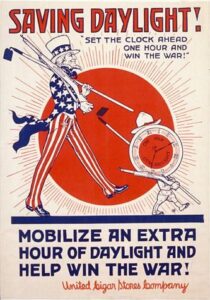
 Millions of people groggily change their clocks twice a year, muttering complaints about Daylight Saving Time (DST) as they rush to get extra sleep. Parents struggle to wake their children, who are late for school, while tired students wonder whether they are safe as they wait in the dark for the bus. Although DST was designed to maximize daylight and boost productivity, it often leaves people feeling out of sync.
In practice, it causes missed alarms, makes pets feel tricked, and triggers nationwide panic when people realize their clocks are set wrong.
Betrayed dogs file formal complaints with sad stares, cats secretly plot revenge, and coffee controls all forms of basic human communication. Fashion takes a nosedive as half-asleep adults accidentally wear their clothes inside out or mismatch their socks. The country collectively asks, “Who keeps letting this happen?”
Blame It on Ben and a Bug Guy
Daylight Saving Time isn’t a new idea. The concept dates back to Benjamin Franklin, who, in 1784, jokingly suggested that people wake up earlier to save on candle use. Yes—one of America’s founding fathers advised folks to go to bed earlier, and we are still adjusting our clocks centuries later. The real credit (or blame) goes to New Zealand entomologist George Hudson, who proposed the idea in 1895—likely to gain more daylight hours to study “bugs.”
In 1907, British builder William Willett promoted making better use of daylight. During World War I, Germany became the first country to officially adopt DST in 1916 to conserve fuel. The United States followed in 1918 and later standardized it in 1966 through the Uniform Time Act, bringing consistency to what had previously been a patchwork of local time changes.
Down to the Core
 At its core, DST disrupts something essential—our sleep. Humans rely on circadian rhythms, internal clocks that regulate sleep, mood, and metabolism. These rhythms align with sunlight, helping us wake up naturally and function effectively throughout the day.
Moving the clock ahead by an hour can temporarily disrupt that alignment. Melatonin production shifts, routines are interrupted, and many people report feeling unusually tired or irritable for several days. Some research has linked the springtime change to short-term increases in heart attacks, strokes, workplace injuries, and traffic accidents, though debate continues about the long-term significance of these findings.
Just Wasting Our Time and Energy?
One of the main reasons supporters cite for DST is energy conservation. Historically, the idea was that extended evening daylight would reduce the need for artificial lighting. More recent studies suggest that overall savings may be modest, as reduced lighting use can be offset by increased heating, cooling, and electronics use. Rather than eliminating energy consumption, DST may shift when it occurs.
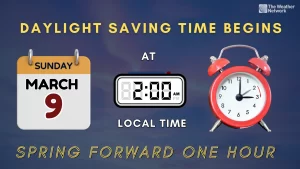 The Unbearable Lightness of Losing an Hour
The debate continues. Some believe DST benefits businesses and promotes outdoor activities, while others argue it harms health and productivity. Several states and countries have considered modifying or eliminating the practice, while others have maintained the current system.
It can feel like jet lag without leaving home forcing our bodies to adapt to a new time zone we never entered. Twice a year, the shift arrives on schedule, routines adjust, and the conversation resurfaces. For now, Daylight Saving Time remains part of the calendar—observed, debated, and reset, one clock at a time.
FYI: IT IS DAYLIGHT SAVING TIME–—NOT DAYLIGHT SAVINGS TIME.
By: Sandra Hartley
March 2026, Category