
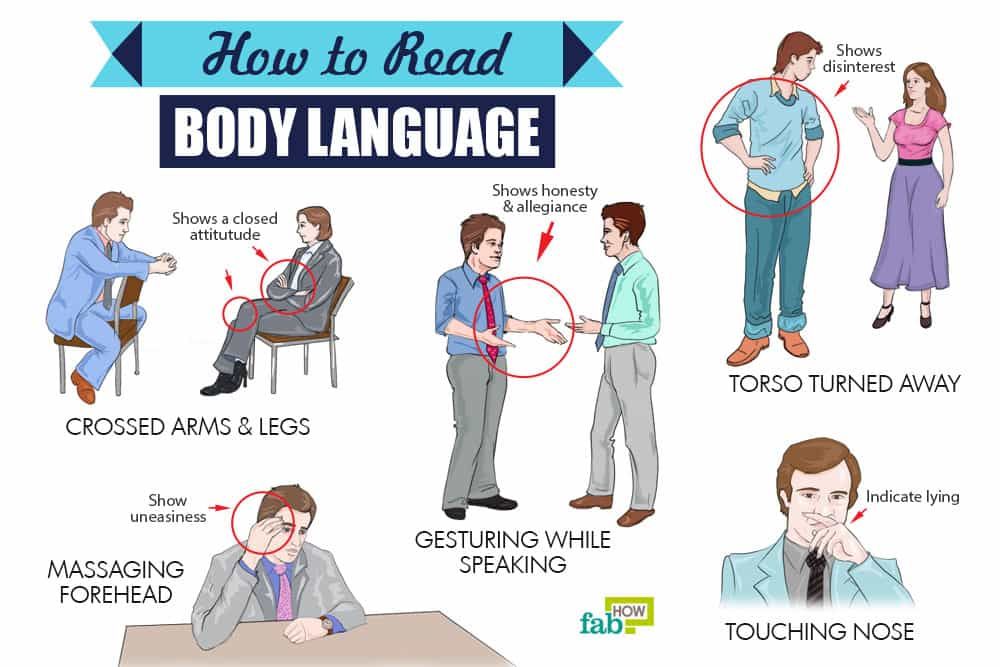
How we move, appear, and hold ourselves speaks volumes. Our bodies constantly communicate, revealing our emotions, intentions, and deepest desires. Welcome to the captivating world of body language, where actions speak louder than words.
While we often focus on the spoken word, our second language is far more powerful and revealing. Have you ever been in a conversation where someone’s words said one thing while their body language screamed another? We’ve all been there. While our spoken languages may differ, we all share the universal language of body language—and it’s far more powerful than we often realize.
 Incredible as it may sound, studies show that words account for only 7% of spoken or written messages. The remaining 93% is nonverbal. Fifty-five percent is conveyed through body movements, facial expressions, and gestures. The other 38% comes from our voice—tone, modulation, pacing, and pauses. Still, body language is complex and shaped by many factors, including personality, cultural background, and the specific situation.
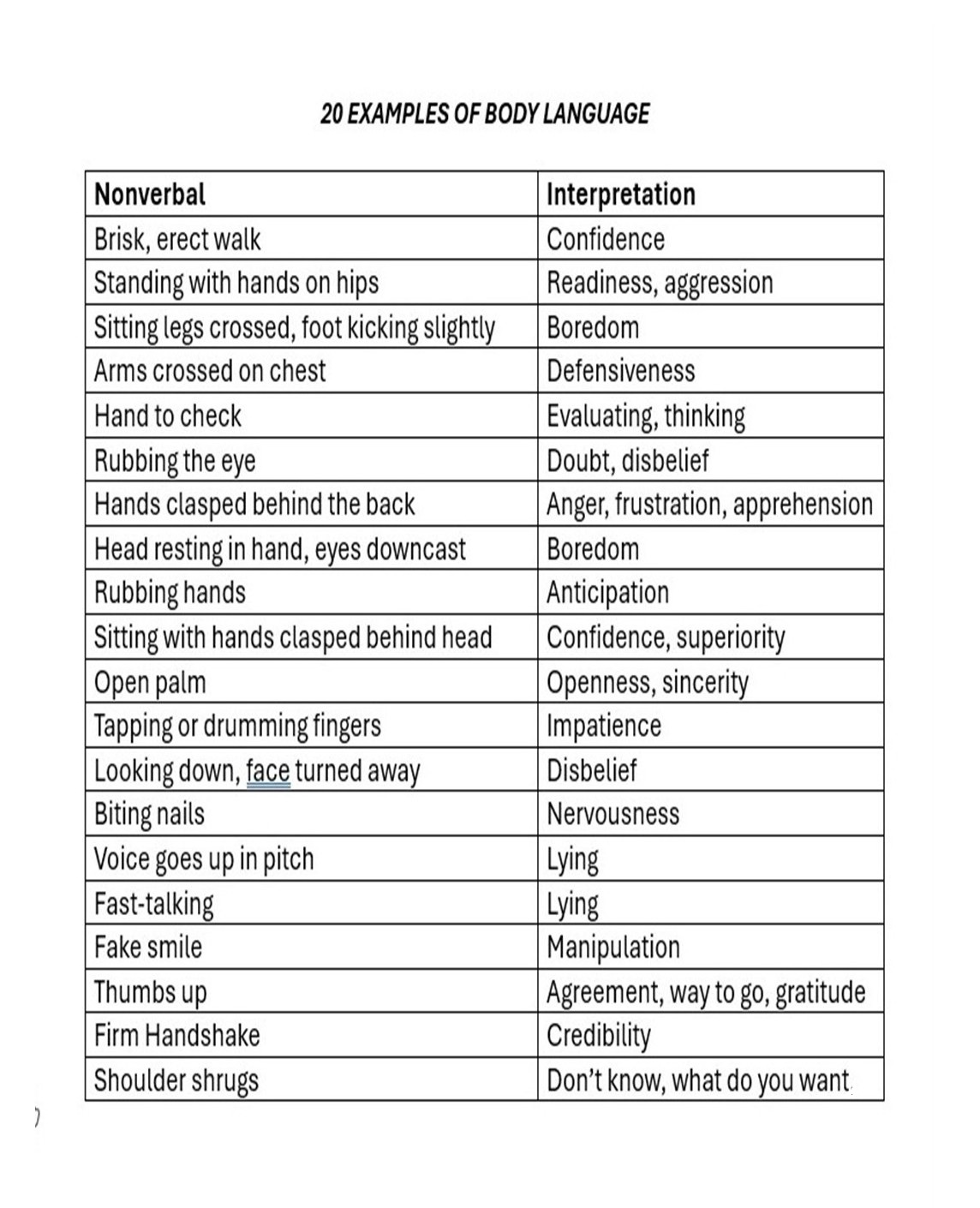
Beneath the surface, body language conveys our internal state. It reflects our moods, emotions, thoughts, intentions, evolved tendencies, psychological and physiological well-being, and cultural and social norms. It’s important to remember that many body movements can have multiple meanings, depending on the context and how the sender and receiver interpret them. None of these signals is absolute.
The Eyes Win
Let’s explore the “leader of the pack” among the 55% of nonverbal cues: eye contact. Perhaps the most potent of all nonverbal signals, eye contact conveys a wealth of information in a single glance. Consider the familiar saying, “The eyes are the windows to the soul.” Why have we come to believe this?
People often say to look directly into someone’s eyes when speaking. Why? Because the eyes often reveal what words try to hide. They can expose our deepest emotions—from joy and sorrow to fear and anger—and sometimes betray our intentions, whether we’re trying to connect or conceal. At the same time, the language of the eyes varies across cultures. What signals respect in one culture may seem aggressive or disrespectful in another.
A direct gaze can convey confidence, spark interest, or even intimidate, depending on context. Averted eyes may signal discomfort, shyness, or uncertainty. A sidelong glance might suggest suspicion, flirtation, or simple assessment. Dilated pupils can indicate interest, attraction, or heightened emotion. Even gaze direction can be revealing. Upward glances are often linked to visual recall, while downward glances are often linked to internal dialogue. The eyes, it seems, speak a language of their own—sometimes contradicting the very words we use.
The next time you interact with someone, pay attention to their eyes. What might they be communicating? And just as important, what message are you sending? In the body language dictionary, eye contact ranks No. 1.
Modulation Ranks Second
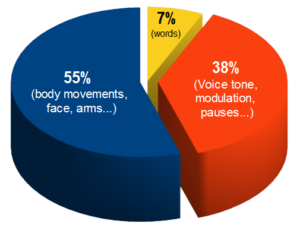 The human voice accounts for 38% of the body-language equation, making vocal modulation a critical element of effective communication. Vocal modulation is the deliberate variation of pitch, tone, pace, and volume to shape how a message is received. Depending on the situation, it can evoke trust, excitement, calm, or discomfort.
Modulation isn’t about what we say but how we say it. It taps into emotion, highlights key ideas, keeps listeners engaged, and improves clarity. Simply put, it gives our words shape and meaning, helping them resonate.
Imagine a cozy evening: a small child sits beside you, eyes wide with anticipation as you open a favorite storybook. As you read, your voice rises and falls with the characters’ emotions, slows for suspense, and grows louder during moments of excitement. The child giggles, gasps, and leans in, fully absorbed. This is voice modulation at its best. You’re not just reading—you’re bringing the story to life.
Now imagine that same child a few years later, reading to a stuffed animal or an imaginary friend. They may not know all the words yet, but they instinctively mimic your vocal shifts. Even without formal instruction, they understand that voice conveys emotion and connection.
 This simple act of reading demonstrates the power of vocal modulation. It shows how our voices shape understanding, build rapport, and transform ordinary communication into something memorable.
Body language
Both visual cues and vocal expression quietly shape our interactions and relationships. By becoming more aware of these signals, we can better understand others and communicate more intentionally.
So the next time you’re chatting with someone, don’t just listen to the words. Watch the eyebrows dance, the hands tell a story, and the posture sing. You may discover a full performance unfolding—without anyone realizing they’re on stage.
By: Sandra Hartley
February 2026