
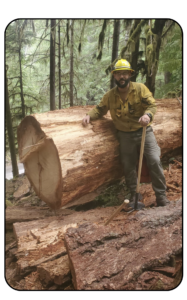
 Keystone Heights resident Christopher Butler came from a family of warriors. His grandfather served in the Army; his father and two uncles served in the Navy, and his aunt was an FBI agent. By the time he was born at Camp Lejeune, North Carolina, his family expected him to make his mark in service. They were not disappointed.
At age nine, Christopher and his family moved to Middleburg, Florida. Driven by a dream of becoming a soldier, he joined the Army National Guard at 20 and served six years in Operation Enduring Freedom.
After an honorable discharge from the Guard, the young soldier from Clay County heard another calling, one few hear and even fewer heed. Inspired by the movie “Only the Brave,” Christopher knew he was called to be a wildland firefighter.
While urban firefighters often capture the spotlight, wildland firefighters face nature’s most destructive forces—raging fires in remote areas, far from immediate medical care or reinforcements.
And Clay County’s son exemplified the exceptional skills and bravery of the elite group. Through hard work and determination, Christopher joined the Florida Forest Service and became a certified wildland firefighter.
Training and Trust
Wildland firefighters are not drawn to comfort or predictability. They bring a willingness to face uncertainty, a tolerance for risk, and deep respect for the natural forces they confront. Their work demands courage and quick judgment, along with restraint — knowing when to advance, when to hold, and when to step back in the face of a fire that can shift without warning.
These qualities are tested under punishing conditions. High heat, choking smoke, and rugged terrain are constants, not exceptions. Firefighters carry heavy equipment for miles, often with limited visibility and no immediate access to medical care. Fatigue is expected; endurance is required. Survival depends not only on physical strength but also on trust — in training, in communication, and in the teammates beside them. In wildland firefighting, a single lapse in awareness or coordination can mean the difference between control and catastrophe.
Beyond the Fire Line
Wildland firefighters don’t just fight fires; they serve in a variety of roles. They help investigate arson, conduct controlled burns, advocate for fire prevention, and respond to disasters beyond fires.
Memory of the Fallen
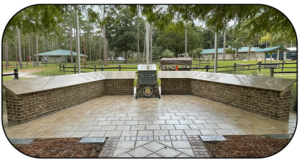 At the Withlacoochee Training Center near Brooksville, Florida, the Florida Wildland Firefighter Memorial stands on a primary training ground for Florida’s wildland firefighters.
The memorial honors those who lost their lives while protecting Florida’s forests, natural resources, and nearby communities, and it stands as a solemn reminder of the inherent risks of wildland firefighting.
Located within an active training facility, the memorial connects past sacrifice with present preparation. Firefighters who train there do so in the shadow of those who came before — reinforcing unity, vigilance, and respect for the profession’s inherent dangers. It is both a place of remembrance and a symbol of the brotherhood and sisterhood among wildland firefighters across agencies and generations.
When the Call Comes
 When not deployed, Christopher lives in Keystone Heights with his wife, MacKenzi. When called, his work can take him across the country to respond to wildfires far beyond his home community.
He does not seek attention for his work, a trait shared by many wildland firefighters whose efforts unfold far from public view. Service runs deep in his family, with two younger siblings serving in the Army National Guard and the Air Force.
Wildland firefighters train and prepare, knowing their work may place them in dangerous, unfamiliar terrain, often far from immediate support. Their success is measured quietly — in fires contained, land protected, and communities spared.
It is work we rarely see — until it is most needed.
By: Sandra Hartley
January 2026
Category: Community