
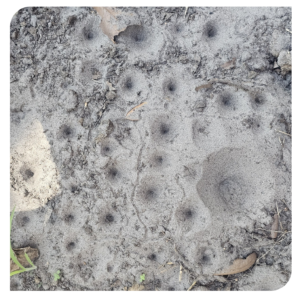
 If you grew up in the South, chances are you spent part of your childhood crouched over a small, funnel-shaped pit in the sand, softly calling to a creature you couldn’t see. I certainly did. On long summer days, I would lean in close, letting my hair fall toward the ground, and chant the familiar rhyme with the solemnity only a child can muster.
“Doodlebug, doodlebug, come out of your house.
Doodlebug, doodlebug, your house is on fire.
Doodlebug, doodlebug, you better come out.”
Sometimes I’d swirl a pine straw or a blade of grass near the crater’s mouth, trying to coax the mysterious inhabitant into showing itself. Most of the time, instead of emerging, the creature below would kick up sand—tiny grains flicking outward in quick bursts. To my young mind, it was proof of life and personality. The doodlebug wasn’t just hiding; it was answering back, defending itself with the only weapon it had. Those little sprays of sand were part of the magic.
But these days, those sandy pits—the childhood “homes” of doodlebugs—are much harder to find. The patches of bare earth where they once lurked now feel quiet. That childhood ritual feels like a fading memory shared by many of us who grew up in Florida’s warm, sandy yards.
The Hidden Architect Beneath the Sand
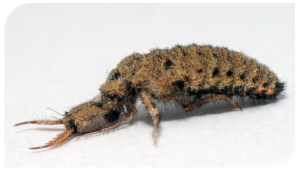
A doodlebug is the larval stage of the antlion, a small, predatory insect. Although adults resemble delicate, drifting 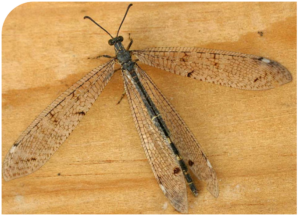 dragonflies, it’s the larvae that do all the engineering. With their broad, armored heads and powerful jaws, they carve perfect, cone-shaped pits in loose, dry sand. Hidden at the bottom, they wait motionless for an ant or other small insect to slip down the slope.
When prey falls in, the doodlebug reacts immediately, flinging sand upward with surprising force. This small avalanche destabilizes the pit walls, pulling the victim down until it drops into those waiting jaws.
Doodlebugs spend most of their lives underground; the larval stage can last for months or even a couple of years. The creature then spins a tiny cocoon and, a few weeks later, emerges as a delicate adult antlion.
What many children unknowingly see when a doodlebug “kicks sand” at their probing pine straw is the same motion it uses to catch prey. Disturbed, it reacts defensively, sending grains flying as a warning from the unseen world just beneath the surface.
Folklore, Wonder, and the Doodlebug Call
Folklore about doodlebugs is older than many realize. Throughout the South—and in parts of the Midwest—children passed down rhymes from generation to generation. They believed these chants could lure the creature upward, even though few had ever actually seen it. Most children caught only glimpses of shifting sand or fleeting kicks of grains that hinted at something alive, hidden beneath.
Before screens and busy schedules filled every hour, doodlebugs offered something rare: a window into nature’s secrets that required patience, imagination, and curiosity. For many children, doodlebugs were the first creatures to show them that the natural world often hides its most intriguing stories right beneath our feet.
 Why Doodlebugs Are Harder to Find Today
The decline of easily visible doodlebug pits is more than nostalgia. Environmental changes—such as the loss of loose, dry sand, pesticide use, shifts in irrigation and moisture levels, and increasing urbanization—have made their once-abundant habitat far rarer. Although they haven’t disappeared entirely, doodlebugs now inhabit smaller, more widely scattered patches of suitable ground.
A Tiny Creature Worth Remembering
Now and then, when I come across a doodlebug pit, I pause instinctively. I crouch, watch, and if the sand shifts even slightly—just enough to hint at movement beneath—I feel that familiar childhood wonder. For a moment, I’m back under the warm Florida sun, whispering a rhyme into the earth and waiting for the faint kick of sand in reply.
Creatures like the doodlebug remind us that beauty often hides in the smallest corners of the natural world. Their presence, once so common, now feels like a quiet treasure—reminding us how much our childhoods were shaped by sandy yards, simple creatures, and nature’s mysteries.
Author’s Note: I found these doodlebugs on a quiet, cool morning at my cow barn, with my four cows standing beside me as I knelt in the sand. Wild turkeys and ducks moved around me as if they, too, were part of the moment. There’s no better reminder that even the smallest stories in nature live right beside us.
By: Sandra Hartley
February 2026