
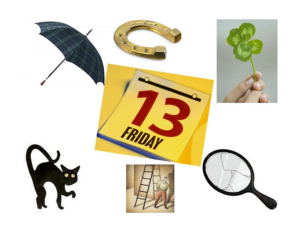
 Superstitions shape our daily rituals, from carrying a lucky charm to wearing a specific jersey on game day. But where do these beliefs originate? At their core, superstitions are rooted in a fascinating psychological phenomenon: operant conditioning. This process, in which behaviors are reinforced by their outcomes, helps explain why certain actions become lasting traditions of good or bad luck.
These behaviors persist across cultures due to both positive and negative reinforcement. If a baseball player wears a specific pair of socks and then wins a game, they may attribute their success to the socks—this is positive reinforcement, in which a behavior is rewarded, thereby encouraging repetition.
Meanwhile, negative reinforcement occurs when an action removes something undesirable, thereby reinforcing the behavior. An example is your car’s beeping when you haven’t buckled your seat belt. The beeping continues until you buckle the belt. The desired behavior is to stop the beeping, which is reinforced by removing the sound when you buckle your seat belt.
These psychological principles explain why superstitions persist, blending personal experience, tradition, and subconscious attempts to exert control over the unpredictable.
Superstitions in Everyday Life
Superstitions are so ingrained in culture that we often follow them unconsciously. They appear in music—Stevie Wonder’s Superstition comments on belief in omens—and in literature, where Shakespeare’s Macbeth relies on witchcraft to shape fate. Even casual sayings like “knock on wood” or “cross your fingers” stem from ancient superstitions yet are used without much thought.
Businesses also subtly acknowledge superstition—many hotels skip the 13th floor, and airlines often omit row 13 on planes. In finance, traders cite the “January Effect” or avoid certain stock moves based on past patterns, echoing superstitious thinking.
Superstitions We Often Overlook
These are five customs we practice daily and never consider rooted in superstition.
Opening Umbrellas Indoors: This belief likely stems from practical concerns. Victorian-era umbrellas had stiff metal spokes that could spring open suddenly, posing a risk of injury or damage indoors. Even earlier, ancient Egyptians considered opening an umbrella indoors, away from the sun, disrespectful to the sun god Ra.
Throwing Coins in a Fountain: Dating back to ancient Rome, people tossed coins into fountains to thank the gods for clean water and to seek blessings. Over time, this practice evolved into the modern superstition that throwing a coin into a  fountain while making a wish brings good fortune or a return to that location.
Blowing Out Birthday Candles: This practice dates to ancient Greece, when cakes with candles were offered to the moon goddess Artemis. In 18th-century Germany, placing candles on birthday cakes became popular, and a superstition arose that blowing them out in one breath would grant a wish.
Wearing Wedding Rings on the Left Hand: Romans believed the vena amoris (vein of love) connected the left ring finger directly to the heart. Although science has disproved this, the tradition has endured as a romantic superstition symbolizing eternal love.
Hanging a Dreamcatcher: Originating with the Chippewa (Ojibwe) Native American tribe, dreamcatchers were believed to filter dreams, letting positive ones pass while trapping nightmares in their web. Over time, they became widely used as protective charms, though improper use or disregard for their cultural significance is sometimes considered bad luck.
The Psychology Behind Superstitions
Our brains often take shortcuts, favoring beliefs based on past experiences—this is cognitive bias. That’s why people hold onto superstitions after a single lucky outcome, even when there’s no real connection. Cognitive dissonance occurs when actions don’t align with beliefs, causing mental discomfort. For example, someone may dismiss superstitions as nonsense yet still knock on wood “just in case,” continuing the habit to ease the contradiction.
Ultimately, superstitions sit at the intersection of logic and mystery. Whether rooted in ancient traditions, cultural symbolism, or subconscious rituals, they shape how we interact with the world, often without our realizing it. By examining them through the lens of psychology, history, and everyday life, we see that they offer comfort, tradition, and a sense of control, even in an unpredictable world.
 The Psychology Behind Superstitions
Our brains often take shortcuts, favoring beliefs based on past experiences—this is cognitive bias. That’s why people cling to superstitions after a single lucky outcome, even when there’s no real connection. Cognitive dissonance arises when actions don’t align with beliefs, causing mental discomfort. For example, someone may dismiss superstitions as nonsense yet still knock on wood “just in case,” continuing the habit to ease the contradiction.
Ultimately, superstitions sit at the intersection of logic and mystery. Whether rooted in ancient traditions, cultural symbolism, or subconscious rituals, they shape how we interact with the world, often without our realizing it. By examining them through the lens of psychology, history, and everyday life, we see that they offer comfort, tradition, and a sense of control, even in an unpredictable world.
By: Sandra Hartley
February 2026