
 Storybook Lies to Real World Woes
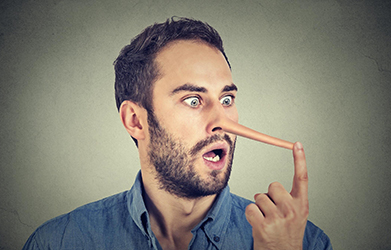
Pinocchio, Carlo Collodi’s wooden puppet, became fiction’s first lie detector when his nose grew in response to deception. More than just punishment, it was a physical reaction to dishonesty, like a polygraph.
The Science of the “Pinocchio Effect”
When someone lies, their nose can change temperature! Scientists discovered this using thermal imaging. Lying requires effort and often causes stress, which disrupts blood flow. This phenomenon, called the “Pinocchio effect,” reflects an involuntary reaction to dishonesty. Thankfully, the nose doesn’t grow!
 The Polygraph’s Curious History
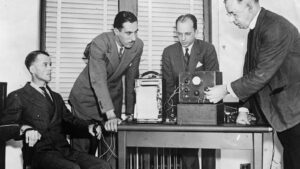
Lie detectors, known as polygraphs, have been associated with truth and deception since the early 20th century.
Psychologist William Moulton Marston pioneered a method linking blood pressure to deception, laying the groundwork for future advances. He also created Wonder Woman, whose Lasso of Truth was inspired by his research.
In the 1920s, police officer and medical student John Augustus Larson developed a device that measured blood pressure, pulse, and respiration. In the 1930s, Leonarde Keeler improved it by adding a skin-conductivity test. Together, they laid the groundwork for modern lie detection.
Despite continued advancements, polygraphs remain under scrutiny, with ongoing debates over their accuracy and reliability.
How Polygraph Tests Work
Polygraphs assess physiological responses—heart rate, blood pressure, breathing, and sweating—on the assumption that lying triggers involuntary stress reactions.
The process consists of three phases:
- Pre-test interview to establish a baseline.
- Examination in which electrodes record responses to neutral and relevant questions.
- Analysis and results, during which a trained examiner interprets the data.
Examiners, often hired by law enforcement, intelligence agencies, private firms, or legal teams, play a vital role in analyzing results.
The Challenge of Accuracy
Polygraph laws vary; tests are sometimes voluntary and sometimes mandatory. Regardless, their reliability continues to raise ethical concerns.
A polygraph does not directly detect lies; it measures physiological stress responses, which can be influenced by nervousness, fear, or pressure. This can lead to subjective interpretations. Heightened reactions may be misinterpreted as deception, while skilled individuals, such as trained liars, can manipulate the results.
Studies estimate accuracy between 60% and 90%, which is far from foolproof. Truth-tellers can be misidentified as liars, while actual liars might pass the test. Experts caution against treating polygraphs as definitive evidence in investigations.
Hollywood vs. Reality
Movies and TV shows sensationalize polygraph tests, portraying them as infallible lie detectors that deliver dramatic, instant results. Law enforcement uses them cautiously, often as a supplementary tool rather than definitive proof.
Hollywood’s exaggerated portrayals create false confidence in polygraphs, leading to wrongful accusations, misplaced beliefs in “beating the test,” and even intimidation tactics. Despite their mystique, polygraphs are not magic truth machines but tools subject to human interpretation.
Beyond the Illusion: Understanding Polygraph Reality
The myth of Pinocchio’s expanding nose remains delightful, much like Hollywood’s inaccurate portrayal of polygraphs as “Lasso of Truth” devices.
Polygraphs measure stress rather than deception, and their results depend on interpretation, making them prone to error. Popular culture often reinforces misconceptions, obscuring the careful perspective held by experts.
While the idea of a perfect lie detector is intriguing, real-world polygraphs require careful consideration. They are better viewed as one tool among many rather than as definitive truth detectors.
By: Sandra Hartley
January 2026
Human Response